
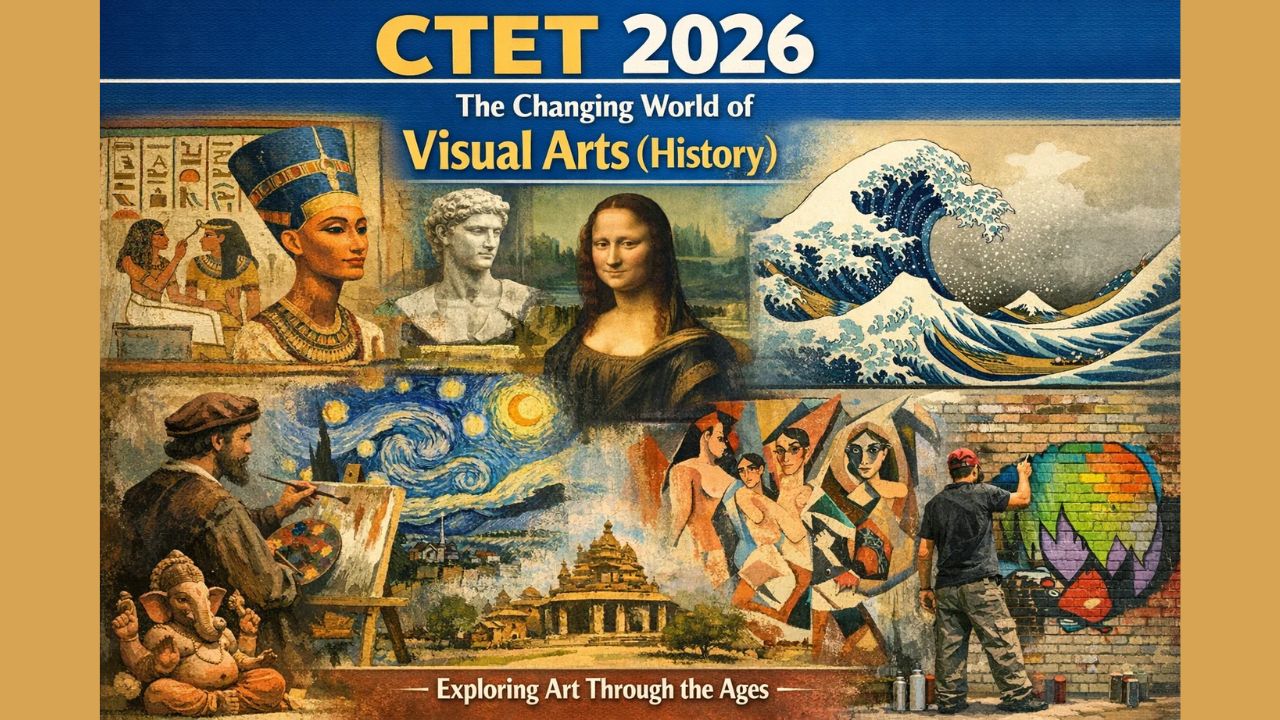
The Changing World of Visual Arts हा लेख दृश्यकलेच्या बदलत्या प्रवाहाचा इतिहास, महत्वाचे कलाकार, कला-संपन्न तंत्रे, आणि सामाजिक-सांस्कृतिक बदल यांचा अभ्यास करतो.
Chapter-wise Overview / विभागानुसार आढावा
Chapter 1: Prehistoric and Ancient Art / प्रागैतिहासिक व प्राचीन कला
- Prehistoric Art: Cave paintings (Lascaux, Altamira), petroglyphs, and megalithic structures.
- प्रागैतिहासिक कला: गुहा भित्तिचित्रे, पाषाणशिल्प, आणि मेगालिथिक संरचना.
- Art was primarily symbolic and ritualistic.
- कला धार्मिक, सांस्कृतिक, आणि प्रतीकात्मक उद्देशाने निर्माण झाली.
Key Artists : Unknown, tribal communities
Prehistoric Art in India
Ancient Cave Paintings – Britannica
Chapter 2: Classical Arts / शास्त्रीय कला
- Greek & Roman Art: Realism, idealized human forms, frescoes, mosaics.
- Indian Classical Art: Maurya & Gupta sculptures, Ajanta and Ellora frescoes.
- शास्त्रीय कला मानवकेंद्रित, संतुलित, आणि धार्मिक कथानकावर आधारित होती.
Key Artists / महत्वाचे कलाकार: Phidias (Greece), Unknown Indian sculptors
Chapter 3: Medieval Arts / मध्ययुगीन कला
- Focused on religious themes: Gothic cathedrals, illuminated manuscripts in Europe.
- भारतीय कला: Chola bronzes, temple architecture, miniature paintings.
- Art reflected devotion, monarchy, and societal hierarchy.
Chapter 4: Renaissance & Baroque / पुनर्जागरण आणि बारोक
- Renaissance (14th-17th century): Emphasis on realism, perspective, human anatomy. Artists: Leonardo da Vinci, Michelangelo.
- Baroque (17th-18th century): Dramatic, ornate, movement-oriented. Artists: Caravaggio, Bernini.
- Focus shifted from purely religious to human experience, nature, and individual expression.
Chapter 5: Modern Arts / आधुनिक कला
- 19th-20th century movements: Impressionism, Cubism, Surrealism, Expressionism.
- Artists: Claude Monet, Pablo Picasso, Salvador Dali, Frida Kahlo.
- Focus on experimentation with form, color, and perspective.
Chapter 6: Contemporary & Digital Arts / समकालीन आणि डिजिटल कला
- Emergence of digital tools, installations, street art, multimedia.
- Globalization influenced art themes and accessibility.
- Artists: Banksy, Yayoi Kusama, TeamLab (Digital installations).
CTET – The Changing World of Visual Arts (History)
1. Prehistoric cave paintings are mainly found in which place in India?
A) Ajanta
B) Ellora
C) Bhimbetka ✅
D) Sanchi
2. Which material was mainly used in prehistoric art?
A) Oil colors
B) Acrylic colors
C) Natural pigments ✅
D) Synthetic dyes
3. Ajanta paintings belong to which religion?
A) Hinduism
B) Jainism
C) Buddhism ✅
D) Islam
4. Ellora caves are famous for:
A) Only Buddhist caves
B) Only Hindu caves
C) Only Jain caves
D) Hindu, Buddhist and Jain caves ✅
5. Which period is known as the “Golden Age of Indian Arts”?
A) Maurya period
B) Gupta period ✅
C) Mughal period
D) British period
6. Chola bronze sculptures are mainly known for:
A) Abstract form
B) Stone carving
C) Graceful metal casting ✅
D) Wall paintings
7. The Nataraja sculpture represents:
A) Vishnu
B) Brahma
C) Shiva as cosmic dancer ✅
D) Krishna
8. Renaissance art originated in which country?
A) France
B) Germany
C) Italy ✅
D) England
9. Who painted the “Mona Lisa”?
A) Michelangelo
B) Raphael
C) Leonardo da Vinci ✅
D) Donatello
10. The main feature of Renaissance art was:
A) Flat figures
B) Use of perspective ✅
C) Symbolism only
D) Decorative patterns
11. Baroque art is known for:
A) Simplicity
B) Stillness
C) Drama and movement ✅
D) Abstract forms
12. Cubism was pioneered by:
A) Vincent van Gogh
B) Pablo Picasso ✅
C) Claude Monet
D) Salvador Dali
13. Impressionism focuses on:
A) Religious themes
B) Mythology
C) Light and color effects ✅
D) Exact realism
14. “Starry Night” painting was created by:
A) Picasso
B) Monet
C) Van Gogh ✅
D) Dali
15. Surrealism is associated with:
A) Reality
B) Dreams and imagination ✅
C) Nature painting
D) Sculpture only
16. Who is a famous Surrealist artist?
A) Monet
B) Picasso
C) Salvador Dali ✅
D) Rembrandt
17. Mughal miniature paintings mainly depicted:
A) Village life
B) Court scenes and royal life ✅
C) Abstract forms
D) Modern themes
18. Which painting style belongs to Rajasthan?
A) Mughal
B) Pahari
C) Rajput ✅
D) Company style
19. Pahari painting style developed in:
A) Deccan plateau
B) Himalayan region ✅
C) Coastal areas
D) Desert region
20. Company paintings were influenced by:
A) French artists
B) Portuguese artists
C) British artists ✅
D) Dutch artists
21. Modern Indian art began during:
A) Gupta period
B) Mughal period
C) British colonial period ✅
D) Post-independence only
22. Who founded the Bengal School of Arts?
A) Raja Ravi Varma
B) Abanindranath Tagore ✅
C) Nandalal Bose
D) Jamini Roy
23. Raja Ravi Varma is known for:
A) Abstract art
B) Folk art
C) Mythological paintings using oil colors ✅
D) Digital art
24. Jamini Roy was inspired by:
A) Western art
B) Folk and tribal art ✅
C) Cubism
D) Baroque
25. Contemporary art mainly focuses on:
A) Traditional themes
B) Religious symbols only
C) Experimentation and new media ✅
D) Sculpture only
26. Digital arts uses:
A) Stone and clay
B) Natural colors
C) Computer and technology ✅
D) Charcoal only
27. Street arts is also known as:
A) Fresco
B) Mural
C) Graffiti ✅
D) Miniature
28. Banksy is famous for:
A) Sculpture
B) Classical painting
C) Street art ✅
D) Folk art
29. Visual art helps children mainly in developing:
A) Memorization
B) Creativity and expression ✅
C) Rote learning
D) Discipline only
30. Art education promotes:
A) Only drawing skills
B) Emotional and social development ✅
C) Examination fear
D) Competition only
31. Which art form uses three dimensions?
A) Painting
B) Drawing
C) Sculpture ✅
D) Sketching
32. Fresco painting is done on:
A) Dry wall
B) Wet plaster ✅
C) Canvas
D) Paper
33. Which color scheme uses opposite colors on color wheel?
A) Monochromatic
B) Analogous
C) Complementary ✅
D) Neutral
34. Warli painting belongs to which state?
A) Gujarat
B) Rajasthan
C) Maharashtra ✅
D) Odisha
35. Madhubani painting belongs to:
A) Bihar ✅
B) Assam
C) Bengal
D) Kerala
36. Art reflects:
A) Only beauty
B) Society and culture ✅
C) Imagination only
D) Personal hobby
37. Which element of art refers to lightness or darkness?
A) Line
B) Texture
C) Value ✅
D) Shape
38. Which principle of art shows balance?
A) Rhythm
B) Proportion
C) Symmetry ✅
D) Emphasis
39. Folk art is usually:
A) Elite-based
B) Community-based ✅
C) Urban-based
D) Technology-based
40. Which art form tells stories visually?
A) Abstract art
B) Narrative art ✅
C) Digital art
D) Installation art
41. Installation art uses:
A) Only painting
B) Only sculpture
C) Space and mixed media ✅
D) Pencil sketches
42. Art helps teachers to:
A) Control students
B) Encourage creativity ✅
C) Increase homework
D) Reduce interaction
43. Which is NOT a visual art?
A) Painting
B) Sculpture
C) Music ✅
D) Drawing
44. Modern art rejects:
A) Experimentation
B) New ideas
C) Traditional realism only ✅
D) Creativity
45. Art education in CTET focuses on:
A) Memorizing artists
B) Understanding child creativity ✅
C) Only exams
D) Technical perfection
46. Which art movement focused on emotions?
A) Cubism
B) Impressionism
C) Expressionism ✅
D) Realism
47. Miniature paintings are generally:
A) Large in size
B) Small and detailed ✅
C) Abstract
D) Digital
48. Which art form is temporary in nature?
A) Sculpture
B) Painting
C) Rangoli ✅
D) Architecture
49. Art encourages which skill in learners?
A) Critical thinking ✅
B) Rote learning
C) Fear
D) Silence
50. The main aim of visual arts education is:
A) Producing artists only
B) Developing creativity and expression ✅
C) Passing exams
D) Copying artworks
निष्कर्ष
- Visual arts reflect society, culture, and technological change.
- From prehistoric symbolism to contemporary digital art, the evolution is continuous.
- Understanding art history aids in appreciating cultural diversity and creativity.