
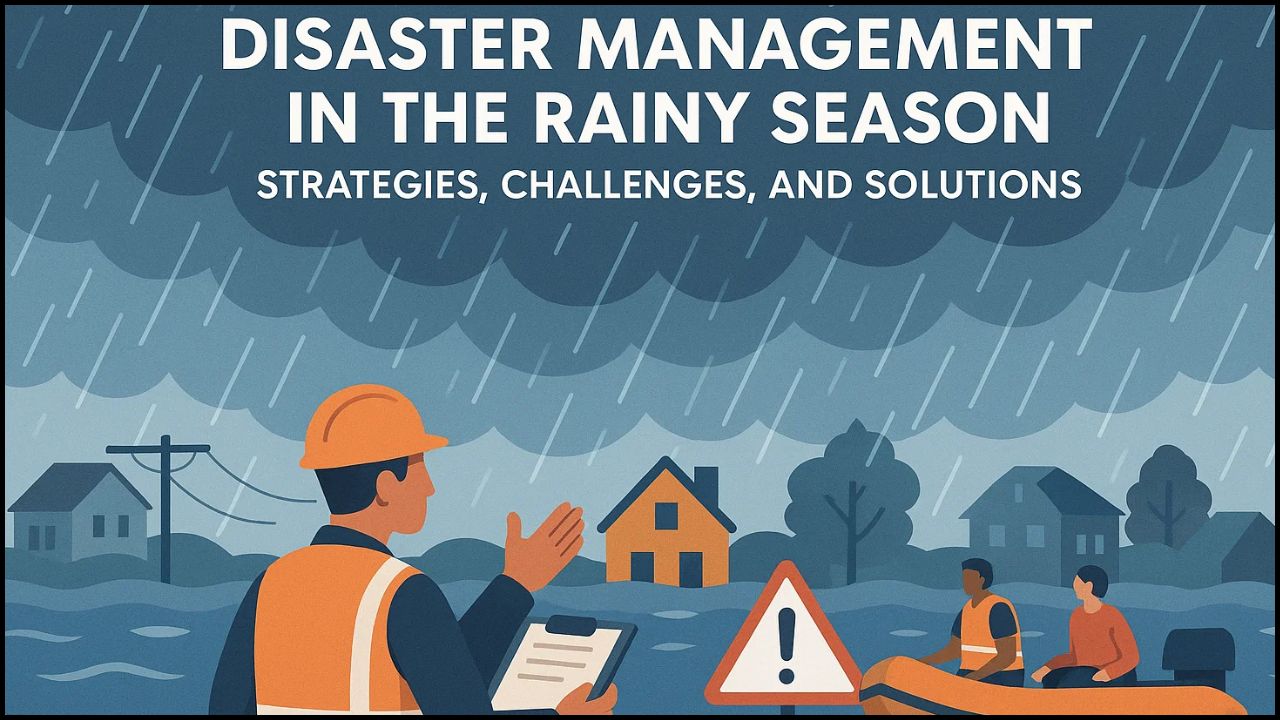
“Learn about disaster management in the rainy season – floods, landslides, health risks, solutions, and preparedness for a safer monsoon in India.”
Introduction
The rainy season, often associated with relief from scorching summers and the rejuvenation of agriculture, also brings with it a range of natural disasters. Floods, landslides, lightning, waterborne diseases, and cyclones are some of the recurring challenges during monsoon in India. Effective disaster management in the rainy season is essential to minimize loss of life, safeguard property, and ensure community resilience. With proper planning, preparedness, and awareness, monsoon hazards can be turned into manageable risks rather than devastating calamities.
To know more about school-level initiatives for awareness, Smart Bharat Manch.
The Impact of Rainy Season Disasters
India receives about 80% of its annual rainfall between June and September. While the monsoon is crucial for agriculture and water supply, excessive or uneven rainfall leads to disasters. Urban areas face waterlogging, rural areas encounter crop damage, and hilly regions experience landslides. Floods displace millions of people every year, while diseases like dengue, malaria, and cholera increase significantly during this period. According to NDMA (National Disaster Management Authority), more than 12% of India’s land is prone to floods, and every year hundreds of lives are lost due to inadequate preparedness.
Importance of Rainy Season Disaster Management
Disaster management during monsoon is not just about emergency response; it also includes mitigation, preparedness, response, and recovery. The importance of rainy season disaster management can be summarized as:
- Protection of lives and property: Floods, lightning, and landslides can be deadly if communities are not prepared.
- Sustainable agriculture: Farmers need support to prevent crop loss due to waterlogging or drought-like conditions in uneven monsoon areas.
- Public health safety: Proper sanitation and preventive healthcare help reduce the spread of waterborne and vector-borne diseases.
- Economic stability: Infrastructure damage due to monsoon disasters leads to huge economic losses. Disaster management reduces these impacts.
Key Components of Rainy Season Disaster Management
1. Flood Management
Floods are the most common rainy season disaster in India. To minimize flood risks:
- Construction of dams, embankments, and check dams should be strengthened.
- Early warning systems should be implemented using modern technologies like Doppler radars.
- Drainage systems in cities must be regularly cleaned to prevent waterlogging.
- Community participation in flood preparedness programs helps in timely evacuation.
Internal reference: For school-level awareness activities, community programs like Zilla Parishad Shala Initiatives play a crucial role in educating students about flood safety.
2. Landslide Mitigation
Hilly and mountainous regions such as Himachal Pradesh, Uttarakhand, and parts of the North-East are highly vulnerable to landslides during heavy rains. Disaster management in these areas includes:
- Planting vegetation to reduce soil erosion.
- Avoiding unplanned construction on steep slopes.
- Using slope stabilization techniques like retaining walls and drainage channels.
- Establishing landslide warning systems and restricting human activities in hazard-prone zones.
3. Cyclone and Storm Preparedness
Monsoon sometimes brings cyclonic storms, especially on the eastern and western coasts of India. To handle cyclones:
- Stronger coastal infrastructure and cyclone shelters should be built.
- Communities should receive cyclone warnings through SMS alerts, radio, and television.
- Evacuation drills and mock exercises should be conducted before the monsoon season.
- Relief materials like food, medicines, and safe drinking water must be stockpiled in advance.
For more guidelines, you can check the Indian Meteorological Department (IMD) website, which provides real-time cyclone alerts and rainfall forecasts.
4. Health and Hygiene Management
Diseases spread rapidly during the rainy season due to stagnant water and unhygienic conditions. Effective strategies include:
- Public health campaigns about using mosquito nets, clean drinking water, and proper sanitation.
- Timely vaccination and fogging activities to control mosquitoes.
- Setting up mobile health clinics in flood-prone areas.
- Ensuring access to clean water through purification systems and distribution of chlorine tablets.
5. Community Awareness and Education
The success of disaster management lies in community awareness. Schools, colleges, and local governing bodies should:
- Conduct awareness programs on flood, cyclone, and lightning safety.
- Encourage mock drills for evacuation and first aid.
- Train students and volunteers in disaster response techniques.
Role of Government and NGOs
The government, through agencies like NDMA, IMD, and state disaster management authorities, plays a vital role in monsoon disaster preparedness. NGOs and community organizations also contribute by providing relief materials, conducting rescue operations, and spreading awareness. The integration of government policies and local participation is the key to effective disaster management.
For example, the State Disaster Management Authority (SDMA) in Maharashtra has been working extensively on flood forecasting and community-based disaster risk reduction. Similarly, NGOs like the Red Cross provide on-ground support during emergencies.
Technology in Disaster Management
Technology has revolutionized disaster management. Some important tools include:
- GIS and Remote Sensing: Helps identify flood-prone and landslide-prone zones.
- Weather Forecasting Models: Provide early warnings of cyclones and heavy rainfall.
- Mobile Applications: Many states have disaster alert apps for real-time communication with citizens.
- Drone Technology: Used for damage assessment and rescue operations in inaccessible areas.
Challenges in Rainy Season Disaster Management
Despite progress, challenges remain:
- Lack of awareness in rural communities.
- Poor drainage and infrastructure in urban areas.
- Inadequate coordination between agencies.
- Climate change leading to unpredictable monsoon patterns.
These challenges highlight the need for stronger policies, increased investment in infrastructure, and active community participation.
Conclusion
Disaster management in the rainy season is a continuous process involving preparedness, mitigation, response, and recovery. The monsoon, while essential for life and agriculture, can turn destructive if not managed properly. Governments, NGOs, communities, and individuals must work together to reduce risks and build resilience. Awareness, education, and technology-driven solutions are the foundation of effective disaster management. With the right strategies, the rainy season can remain a blessing rather than a disaster.