
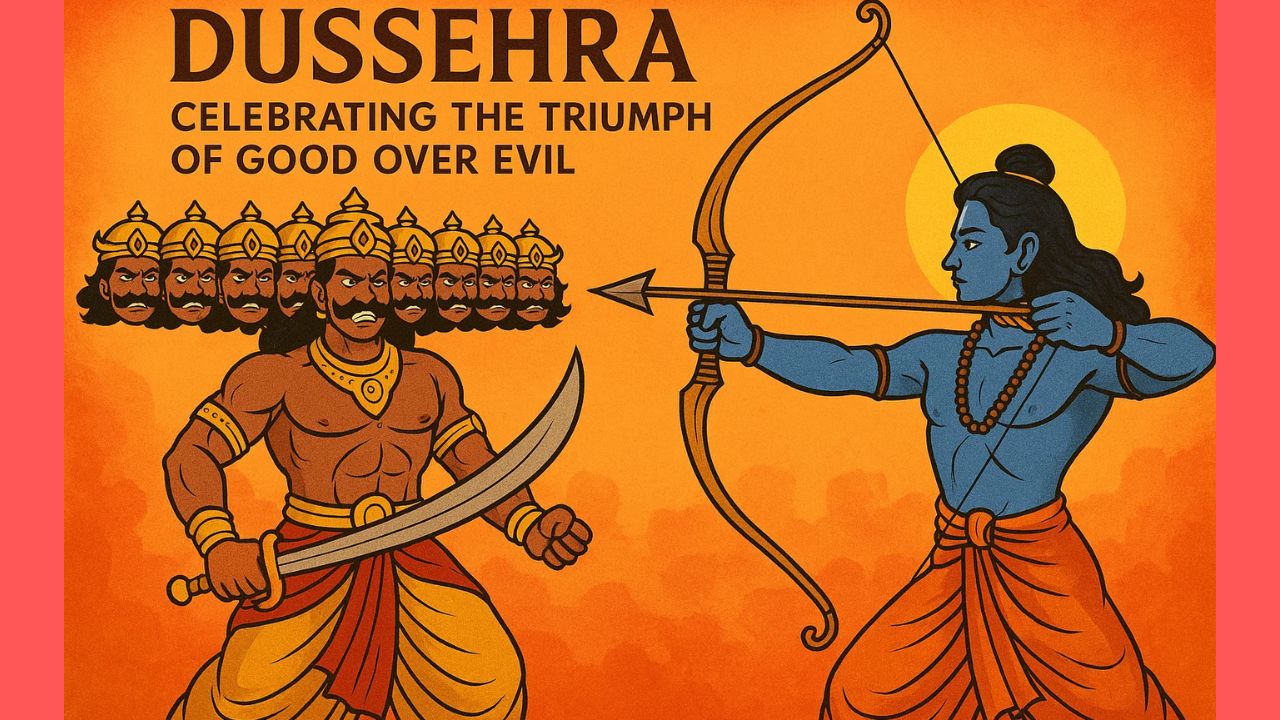
“Dussehra, also known as Vijayadashami, is a major Hindu festival celebrating the victory of good over evil. This article explores its historical significance, rituals, regional celebrations, and cultural impact, highlighting how the festival unites communities and preserves Indian traditions.”
Introduction-Dussehra
Dussehra , also known as Vijayadashami, is one of the most significant Hindu festivals celebrated across India and various parts of the world. Observed on the tenth day after the nine nights of Navratri, Dussehra marks the victory of good over evil, symbolized by Lord Rama’s triumph over the demon king Ravana in the epic Ramayana.
Explore our guide on Indian festivals and cultural traditions.
Historical Significance
The festival’s roots lie in the ancient Indian epic, the Ramayana. According to the legend, Ravana, the ten-headed demon king of Lanka, abducted Sita, the wife of Lord Rama. After a fierce battle, Rama, aided by his loyal companion Hanuman and an army of monkeys, defeated Ravana and rescued Sita. This victory signifies the triumph of righteousness over unrighteousness, truth over falsehood, and good over evil.
In some regions, Dussehra also commemorates Goddess Durga’s victory over the buffalo demon Mahishasura, symbolizing the power of the divine feminine and the destruction of evil forces.
Cultural Celebrations
Dussehra is celebrated with immense enthusiasm and devotion across India, with each region adding its unique flavor to the festivities. Read about Dussehra on Britannica
- North India: In states like Uttar Pradesh, Bihar, and Delhi, the festival is marked by grand Ramlila performances, where the story of Lord Rama’s life and his battle with Ravana is enacted. The celebrations culminate with the burning of effigies of Ravana, his son Meghnad, and his brother Kumbhakarna, symbolizing the destruction of evil.
- South India: In Karnataka, particularly in Mysuru, Dussehra is celebrated as ‘Nadahabba’ (the state festival). The city is adorned with lights, and a grand procession featuring decorated elephants, royal guards, and cultural performances takes place. In Tamil Nadu, the festival is celebrated as ‘Vijayadashami’ with the worship of tools and instruments, known as ‘Ayudha Puja.’
- West India: In Maharashtra and Gujarat, Dussehra marks the end of Navratri, with people performing ‘Garba’ and ‘Dandiya’ dances. In Maharashtra, it is also a day for ‘Shami Puja,’ where people worship the Shami tree, symbolizing the victory of the Pandavas over the Kauravas.
- East India: In West Bengal, Dussehra is celebrated as Durga Puja, where elaborate pandals are set up, and idols of Goddess Durga are worshipped. The festival concludes with the immersion of the idols in water bodies.
Rituals and Traditions
Dussehra is a day of various rituals and traditions:
- Ramlila Performances: The enactment of Lord Rama’s life story, known as Ramlila, is a significant tradition. These performances are held in open grounds and are attended by people of all ages.
- Burning of Effigies: The burning of effigies of Ravana, Meghnad, and Kumbhakarna symbolizes the destruction of evil. This act is accompanied by fireworks and is a major attraction for children and adults alike.
- Ayudha Puja: In South India, this day is dedicated to the worship of tools, instruments, and vehicles, known as ‘Ayudha Puja.’ People clean and decorate their tools and offer prayers for prosperity and success.
- Shami Puja: In Maharashtra, people worship the Shami tree, which is believed to have been used by the Pandavas to hide their weapons during their exile. This worship signifies the victory of good over evil.
Regional Variations
While the essence of Dussehra remains the same, the way it is celebrated varies across regions:
- Mysuru Dasara: The Mysuru Dasara is a grand affair, with the royal family participating in the celebrations. The city is illuminated, and a procession featuring decorated elephants and cultural performances takes place.
- Deoghar’s Unique Tradition: In Deoghar, Jharkhand, Dussehra is celebrated by honoring Ravana as a revered scholar rather than a villain. This unique tradition emphasizes Ravana’s intellect and devotion, promoting an alternative narrative that respects his knowledge and devotion over his actions in the Ramayana.
- Miniature Ravanas in Jaipur: In Jaipur, there’s a growing trend of celebrating Dussehra with miniature Ravana effigies. Due to increasing discomfort with crowded public events, many families and housing societies are opting for smaller, local festivities, boosting the demand for smaller Ravana effigies.
Significance in Modern Times
In contemporary society, Dussehra holds profound significance:
- Moral Lessons: The festival teaches the importance of truth, righteousness, and the ultimate triumph of justice over wrong. It encourages individuals to reflect on their actions and strive for moral integrity.
- Community Bonding: Dussehra fosters a sense of community as people come together to celebrate, perform rituals, and partake in festivities. It strengthens social bonds and promotes unity.
- Cultural Preservation: The various traditions and rituals associated with Dussehra help preserve cultural heritage and pass on values to future generations.
Conclusion
Dussehra is more than just a festival; it is a celebration of the eternal battle between good and evil. It serves as a reminder that righteousness will always prevail, and it encourages individuals to uphold moral values in their daily lives. As we celebrate Dussehra, let us reflect on its teachings and strive to bring positivity and goodness into the world.