
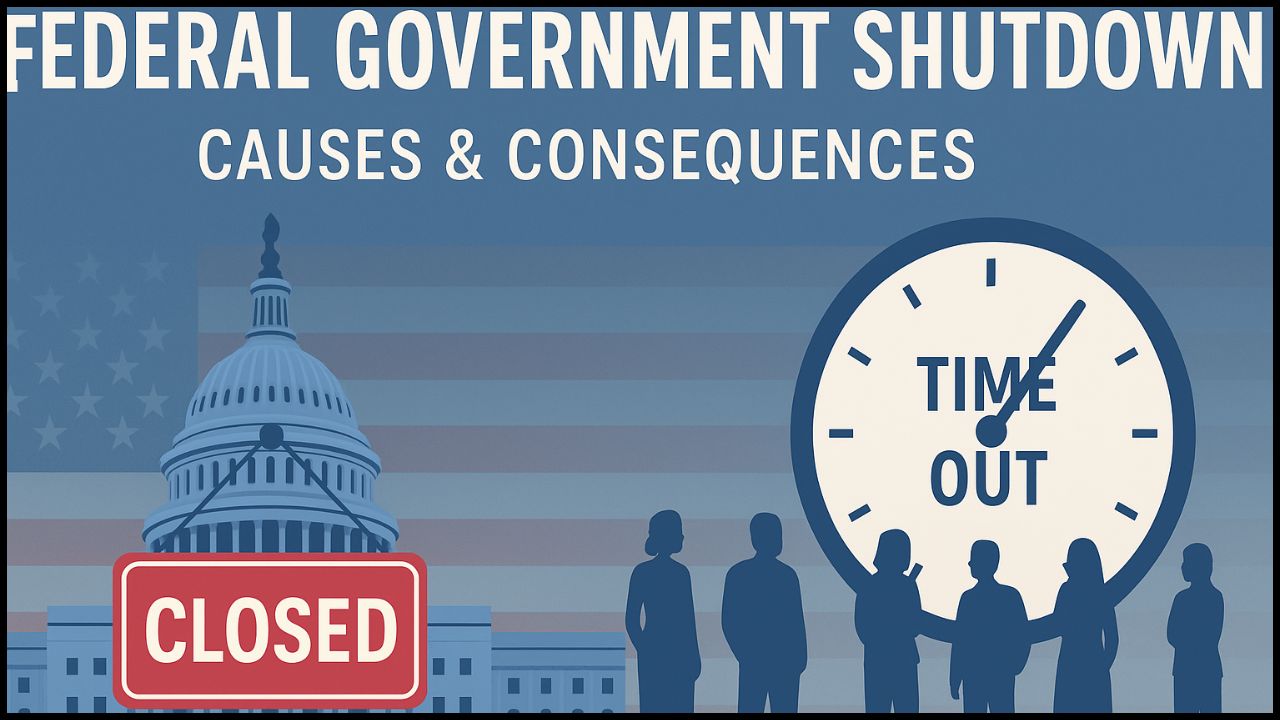
A federal government shutdown occurs when the U.S. Congress fails to pass sufficient funding bills or the President refuses to sign them into law. This results in the temporary closure of non-essential government services, causing economic, social, and political disruption. Understanding its reasons, history, and effects is crucial for grasping its impact on citizens, the economy, and governance.
Understanding Federal Government Shutdown
A federal government shutdown happens when the U.S. federal agencies run out of legally approved funding. Under the Antideficiency Act, federal agencies cannot spend money without congressional approval. If Congress does not pass a budget or a continuing resolution, government operations slow down or come to a halt.
Essential services such as military operations, law enforcement, air traffic control, and emergency healthcare continue. However, many “non-essential” services, including national parks, research institutions, and some public offices, may close. More about result click on UPSC Result 2025
Read for confidential information USA.gov – Government Shutdown Information
Historical Background of Government Shutdowns
The U.S. has witnessed several government shutdowns since the late 20th century. The modern concept began in 1980 after Attorney General Benjamin Civiletti ruled that government agencies must shut down during funding gaps.
Some major shutdowns include:
- 1995-96 Shutdown under President Bill Clinton, lasting 21 days due to disputes over healthcare, budget cuts, and taxes.
- 2013 Shutdown under President Barack Obama, lasting 16 days due to disagreements over the Affordable Care Act.
- 2018-2019 Shutdown under President Donald Trump, the longest in history (35 days), over border wall funding.
These events highlight how political deadlock can directly affect governance and citizens.
Causes of a Government Shutdown
Several political and economic reasons trigger a federal shutdown:
- Budget Disagreements – When Congress and the President fail to agree on spending levels for various departments.
- Policy Conflicts – When political leaders tie policy issues (like healthcare, immigration, or climate change) to the budget process.
- Partisan Politics – Increasing polarization between Republicans and Democrats often delays compromises.
- Debt Ceiling Issues – When the government reaches its borrowing limit, funding disputes worsen.
Impact on Citizens
The consequences of a shutdown are widely felt by the public:
- Federal Employees: Hundreds of thousands face furloughs (temporary unpaid leave), while others work without pay.
- Public Services: Services like passport processing, national parks, and research funding are delayed or suspended.
- Healthcare & Social Programs: While programs like Medicare and Medicaid continue, administrative delays cause inconvenience.
- Small Businesses & Farmers: Federal loans, grants, and subsidies are delayed, hurting economic activity.
- Travel & Security: Airport security and air traffic control continue, but staff shortages may increase waiting times. Congressional Research Service Report
Impact on the Economy
The economic effects of a shutdown can be massive. The Congressional Budget Office (CBO) estimated that the 2018-19 shutdown cost the U.S. economy around $11 billion, with $3 billion permanently lost.
Key economic impacts include:
- Decline in GDP growth.
- Stock market uncertainty and volatility.
- Disruption of federal contracts, delaying business operations.
- Reduced consumer confidence due to unstable governance.
Political Consequences
Shutdowns often reflect deep divisions in American politics. While leaders may use them to pressure the opposition, they often damage public trust in government institutions. Historically, shutdowns have hurt political parties responsible for the deadlock, reducing their approval ratings.
For example, the 2013 shutdown largely damaged Republicans’ image, while the 2018-19 shutdown created significant political backlash for the Trump administration.
Global Implications
Since the U.S. is a global economic power, a shutdown has international effects. Foreign investors worry about instability, leading to fluctuating exchange rates and reduced confidence in U.S. governance. Delays in foreign aid, military cooperation, and trade agreements also disrupt international relations.
Avoiding Government Shutdowns
To prevent shutdowns, the U.S. uses short-term funding measures like Continuing Resolutions (CRs). Some policymakers suggest reforms such as:
- Automatic funding extensions to avoid service disruptions.
- Stronger bipartisan budget negotiations.
- Linking budget approvals to long-term infrastructure and social goals.
Conclusion
A federal government shutdown is more than just a political disagreement; it disrupts millions of lives, harms the economy, and weakens public trust in democracy. While debates and negotiations are part of governance, prolonged deadlocks damage the country’s stability. Ensuring smoother budget processes and bipartisan cooperation is essential to prevent future shutdowns.
For more related information on government functioning, visit:: White House – Budget and Spending