
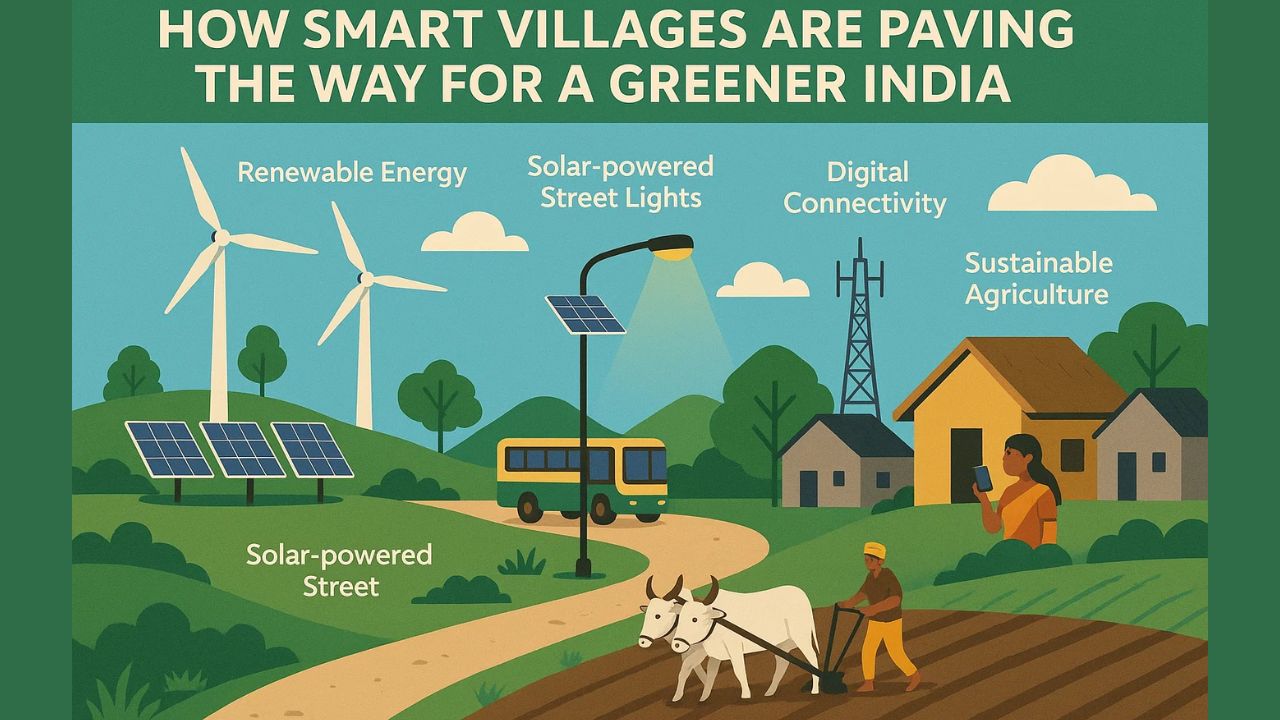
India’s rural areas, home to over 65% of the population, are pivotal in shaping the nation’s sustainable future. Greener India the Smart Village initiative, inspired by Mahatma Gandhi’s vision of “Gram Swaraj” (village self-rule), aims to transform rural communities into self-sustaining hubs that harmonize technology, ecology, and community welfare. By integrating digital infrastructure, renewable energy, and sustainable practices, Smart Villages can significantly contribute to India’s Green India Mission, which seeks to enhance environmental sustainability and address climate change.
1. Renewable Energy Integration
A cornerstone of Smart Villages is the adoption of renewable energy sources, reducing dependence on fossil fuels and decreasing carbon footprints.Greener India For instance, the Climate Smart Village initiative in Sehal and Chatti, Jharkhand, implemented solar-powered irrigation systems, agro-processing units, and household electricity, leading to a substantial decrease in carbon emissions and fostering economic growth through enhanced agricultural productivity. Schneider Electric
Read more information about green energy and government schemes click here.
2. Sustainable Agriculture Practices
Smart Villages promote climate-resilient farming techniques, such as organic farming, water-efficient irrigation, and agroforestry. These practices not only increase agricultural yield but also restore soil health and biodiversity. Greener India The integration of technology, like AI-driven apps in Satnavari village, assists farmers in optimizing irrigation and monitoring soil health, thereby enhancing productivity and sustainability. The Times of India
3. Waste Management and Circular Economy
Implementing efficient waste management systems is crucial in Smart Villages. For example, Goshree Islands in Kerala aim to achieve net-zero carbon emissions by 2030 through initiatives like solar energy adoption, waste segregation, and promoting organic farming.Greener India These efforts contribute to reducing pollution and fostering a circular economy. The Times of India
4. Water Conservation and Management
Smart Villages emphasize rainwater harvesting, watershed management, and efficient irrigation techniques to conserve water resources. In Ralegan Siddhi, Maharashtra, community-led initiatives like rainwater harvesting and canal digging have significantly improved water availability, supporting sustainable agriculture and community resilience. Wikipedia
5. Digital Connectivity and Education
Enhancing digital infrastructure in Smart Villages facilitates access to online education, healthcare, and government services. The AI-driven model in Satnavari village exemplifies how digital tools can bridge gaps in education and healthcare, empowering rural communities and promoting sustainable development. The Times of India
6. Community Participation and Governance
Active community involvement is essential for the success of Smart Villages. Programs like the Sansad Adarsh Gram Yojana (SAGY) encourage MPs to adopt villages and implement development plans, fostering a sense of ownership and accountability among villagers. Wikipedia
7. Policy Support and Institutional Framework
The Government of India supports Smart Village initiatives through policies and frameworks that promote sustainable rural development. Collaborations between government bodies, NGOs, and private sectors are instrumental in scaling up successful models and ensuring long-term sustainability. smartvillagemovement.org
Empowering Rural Communities for a Sustainable Future
Smart Villages are not just about technology; they are about empowering communities to take charge of their environment and resources. By combining traditional knowledge with modern innovations, villagers can adopt practices that reduce carbon footprints and protect natural ecosystems. Greener India For example, integrating solar-powered irrigation and biogas systems helps reduce reliance on non-renewable energy, while also creating income opportunities for local families.
Education and awareness play a crucial role in this transformation. Villagers trained in sustainable farming, water management, and waste recycling can make informed decisions that benefit both the environment and the economy. Greener India Digital platforms provide access to real-time weather updates, crop prices, and best agricultural practices, enabling farmers to plan efficiently and minimize resource wastage.
Furthermore, community-led initiatives like tree plantation drives, clean energy projects, and water conservation programs foster collective responsibility. Greener India Local governance models encourage villagers to participate in planning and implementation, ensuring that sustainability becomes a shared goal rather than an imposed mandate.
By nurturing environmentally conscious rural communities, Smart Villages can act as catalysts for India’s Green India Mission, demonstrating that development and sustainability can coexist harmoniously.
Role of Technology in Green Villages
Technology plays a pivotal role in making villages smarter and greener. By adopting IoT-based sensors, farmers can monitor soil moisture, temperature, and crop health, ensuring optimal use of water and fertilizers. Greener India This reduces wastage and promotes sustainable agriculture. Digital marketplaces enable villagers to sell their produce directly to consumers, reducing carbon emissions associated with transportation and intermediaries.
Moreover, smart energy management systems help track electricity consumption and optimize the use of renewable energy sources, like solar and wind, reducing dependency on fossil fuels. Mobile apps and e-learning platforms provide training on sustainable practices, from organic farming to waste segregation, empowering the community to actively participate in environmental protection.
By integrating technology, Smart Villages can efficiently manage natural resources, boost local economies, and contribute significantly to the Green India Mission, demonstrating a model of development that is both modern and eco-friendly.
Conclusion-Greener India
Smart Villages are not merely a technological upgrade; they represent a holistic approach to rural development that aligns with India’s Green India Mission. By integrating renewable energy, sustainable agriculture, efficient waste management, and digital connectivity, Smart Villages can drive environmental conservation, economic growth, and social equity. The success of initiatives in Sehal, Satnavari, and Ralegan Siddhi demonstrates the transformative potential of Smart Villages in contributing to a greener and more sustainable India.