
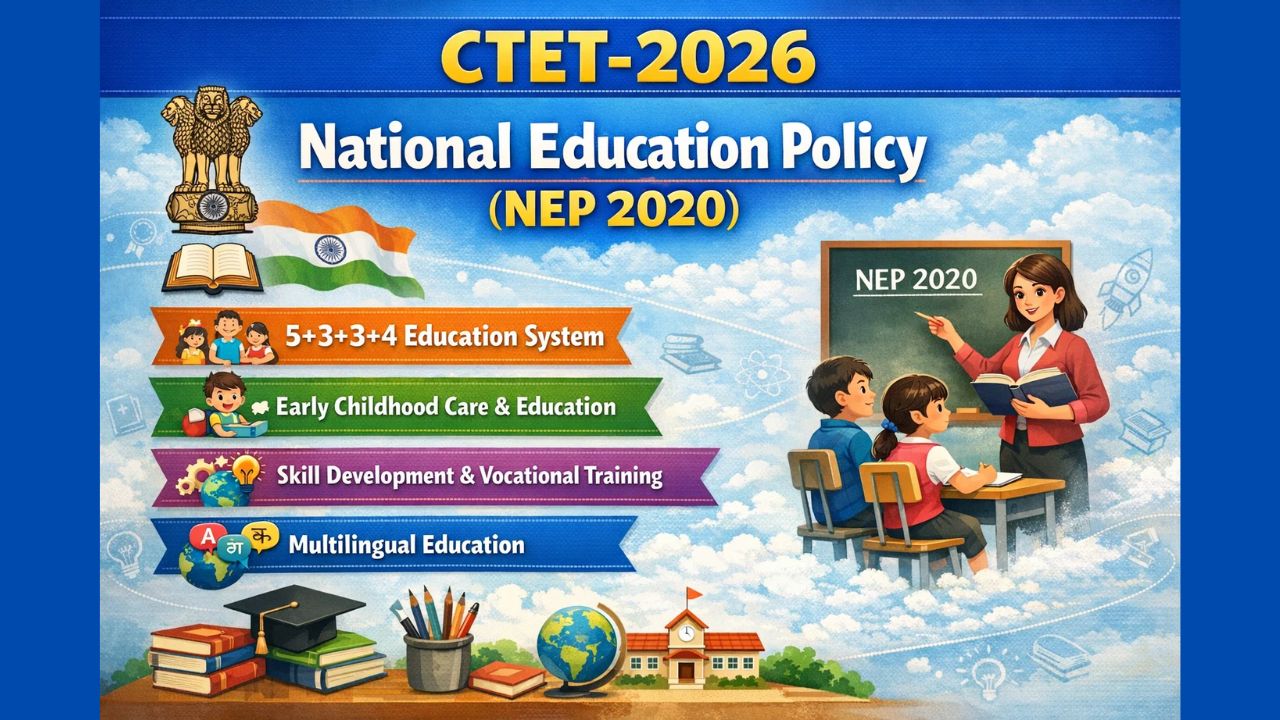
राष्ट्रीय शिक्षण धोरण 2020 (National Education Policy 2020) हे भारतातील शिक्षण व्यवस्थेत बदल घडवणारे धोरण आहे. हे धोरण विद्यार्थीकेंद्रित शिक्षण, सर्वांगीण विकास, कौशल्याधिष्ठित शिक्षण आणि समावेशकता यावर भर देते.
शालेय शिक्षणाची नवीन रचना 5+3+3+4 मॉडेल आहे. NEP 2020 मध्ये मातृभाषा माध्यम, व्यावसायिक शिक्षण, तंत्रज्ञानाचा वापर आणि बालकेंद्रित शिक्षण यावर विशेष लक्ष दिले आहे.
CTET 2026 साठी NEP 2020 वर आधारित प्रश्न Child Development, Pedagogy, Assessment आणि Teacher Education मध्ये विचारले जातात.
हे MCQs CTET परीक्षेच्या तयारीसाठी उपयुक्त आहेत.
प्रस्तावना
National Education Policy 2020 was introduced by the Government of India in July 2020.
राष्ट्रीय शिक्षण धोरण 2020 हे भारत सरकारने जुलै 2020 मध्ये जाहीर केले.
It replaces the earlier education policies of 1968 and 1986.
हे धोरण 1968 आणि 1986 च्या शिक्षण धोरणांऐवजी लागू करण्यात आले आहे.
The main aim of NEP 2020 is holistic development of learners, quality education and learner-centred teaching.
NEP 2020 चा मुख्य उद्देश म्हणजे विद्यार्थ्यांचा सर्वांगीण विकास, दर्जेदार शिक्षण आणि विद्यार्थीकेंद्रित अध्यापन.
CTET-2026 Child Development & Pedagogy – बालविकास व अध्यापनशास्त्र
NEP 2020 Full Text – Ministry of Education – NEP 2020 PDF
Objectives of National Education Policy / उद्दिष्टे
Major Objectives (मुख्य उद्दिष्टे):
- Universal access to education
→ सर्व मुलांना शिक्षणाची समान संधी - Equity and inclusion
→ शिक्षणात समानता व समावेशकता - Quality and outcome-based education
→ गुणवत्ताधारित व परिणामाभिमुख शिक्षण - Skill development and employability
→ कौशल्यविकास व रोजगाराभिमुख शिक्षण - Promotion of Indian values and culture
→ भारतीय संस्कृती व मूल्यांचा प्रसार
School Education Structure – 5+3+3+4
National Education Policy 2020 replaces the old 10+2 system with a new 5+3+3+4 structure.
NEP 2020 मध्ये जुनी 10+2 रचना बदलून 5+3+3+4 ही नवीन रचना लागू करण्यात आली आहे.
1) Foundational Stage (मूलभूत टप्पा) – 5 Years
- Age: 3–8 years
- अंगणवाडी + इयत्ता 1 व 2
- Play-based and activity-based learning
- खेळातून व कृतीतून शिक्षण
2) Preparatory Stage (तयारीचा टप्पा) – 3 Years
- Grades 3–5
- Reading, writing, numeracy
- अनुभवाधारित शिक्षणावर भर
3) Middle Stage (मध्यम टप्पा) – 3 Years
- Grades 6–8
- Critical thinking, coding, vocational exposure
- तर्कशक्ती व कौशल्य विकास
4) Secondary Stage (माध्यमिक टप्पा) – 4 Years
- Grades 9–12
- Multidisciplinary and flexible subject choice
- बहुविषयक व लवचिक शिक्षण
Medium of Instruction / शिक्षणाचे माध्यम
National Education Policy 2020 recommends mother tongue or regional language as the medium of instruction till Grade 5 (preferably till Grade 8).
NEP 2020 नुसार इयत्ता 5 (आवश्यक असल्यास 8) पर्यंत शिक्षण मातृभाषेत असावे.
Benefits / फायदे :
- Better conceptual understanding
→ संकल्पना अधिक स्पष्ट होतात - Increased confidence
→ आत्मविश्वास वाढतो
Assessment Reforms / मूल्यमापनातील सुधारणा
National Education Policy 2020 focuses on formative and competency-based assessment.
NEP 2020 मध्ये पाठांतराऐवजी समज-आधारित मूल्यमापनावर भर आहे.
- Continuous assessment
→ सातत्यपूर्ण मूल्यमापन - Stress-free exams
→ तणावमुक्त परीक्षा - Conceptual understanding over rote learning
→ पाठांतराऐवजी समज
Teacher Education / शिक्षक शिक्षण
Teacher is the key pillar of National Education Policy 2020.
शिक्षक हा NEP 2020 चा केंद्रबिंदू आहे.
- 4-year Integrated B.Ed. by 2030
→ 4 वर्षांचा एकत्रित बी.एड. अभ्यासक्रम - Continuous Professional Development (CPD)
→ शिक्षकांचे सातत्यपूर्ण प्रशिक्षण - Teacher as facilitator
→ शिक्षक मार्गदर्शक म्हणून
Inclusive Education / समावेशक शिक्षण
NEP 2020 ensures education for all learners, including CWSN and disadvantaged groups.
NEP 2020 सर्व घटकांसाठी समावेशक शिक्षणावर भर देते.
- Support for CWSN
- Gender Inclusion Fund
- Educational support to SC/ST/OBC/minorities
Vocational Education / व्यावसायिक शिक्षण
- Vocational education from Grade 6
- Internship and hands-on training
- “Learning by Doing” approach
- करून शिकण्यावर भर
Use of Technology / तंत्रज्ञानाचा वापर
NEP 2020 promotes digital and blended learning.
NEP 2020 मध्ये डिजिटल शिक्षणावर भर देण्यात आला आहे.
- DIKSHA, SWAYAM platforms
- Online & blended learning
- Technology as a support, not a replacement
Importance of NEP 2020 for CTET-2026
CTET Exam Perspective:
- Questions directly asked fromNational Education Policy 2020
- Linked with CDP and pedagogy
- Focus on child-centred education
- Helps develop modern teaching outlook
👉 CTET-2026 मध्ये National Education Policy 2020 वर 3–5 प्रश्न अपेक्षित आहेत.
National Education Policy 2020 – 50 MCQs
1. National Education Policy 2020 was announced in the year –
NEP 2020 कोणत्या वर्षी जाहीर झाले?
A) 2018
B) 2019
C) 2020
D) 2021
2. NEP 2020 replaced which education policies?
NEP 2020 ने कोणती शिक्षण धोरणे बदलली?
A) 1952 & 1964
B) 1968 & 1986
C) 1977 & 1992
D) 1986 & 2009
3. Main aim of National Education Policy 2020 is –
NEP 2020 चे मुख्य उद्दिष्ट काय आहे?
A) Examination reform
B) Rote learning
C) Holistic development
D) Digital education only
4. New school education structure is –
नवीन शालेय शिक्षण रचना कोणती आहे?
A) 10+2
B) 8+4
C) 5+3+3+4
D) 6+3+3
5. Foundational stage includes which age group?
मूलभूत टप्प्यातील वयोगट कोणता?
A) 0–3 years
B) 3–8 years
C) 6–11 years
D) 11–14 years
6. Anganwadi education is part of –
अंगणवाडी शिक्षण कोणत्या टप्प्यात येते?
A) Preparatory stage
B) Middle stage
C) Foundational stage
D) Secondary stage
7. Medium of instruction till Grade 5 should be –
इयत्ता 5 पर्यंत शिक्षणाचे माध्यम काय असावे?
A) English
B) Hindi
C) Mother tongue / Regional language
D) Any foreign language
8. NEP 2020 emphasizes which learning approach?
NEP 2020 कोणत्या शिक्षण पद्धतीवर भर देते?
A) Passive learning
B) Experiential learning
C) Memorization
D) Competitive learning
9. Preparatory stage covers which classes?
तयारीचा टप्पा कोणत्या इयत्तांचा समावेश करतो?
A) 1–2
B) 3–5
C) 6–8
D) 9–10
10. Coding is introduced from –
कोडिंग कोणत्या टप्प्यात सुरू होते?
A) Foundational
B) Preparatory
C) Middle
D) Secondary
11. Vocational education starts from –
व्यावसायिक शिक्षण कधीपासून सुरू होते?
A) Grade 1
B) Grade 3
C) Grade 6
D) Grade 9
12. Assessment in NEP 2020 is mainly –
NEP 2020 मधील मूल्यमापन कसे आहे?
A) Marks based
B) Rote based
C) Competency based
D) Rank based
13. Board exams under NEP 2020 will focus on –
NEP 2020 मधील बोर्ड परीक्षा कशावर भर देतील?
A) Speed
B) Memory
C) Conceptual understanding
D) Competition
14. Teacher’s role in NEP 2020 is –
NEP 2020 नुसार शिक्षकाची भूमिका कोणती?
A) Instructor
B) Authority
C) Facilitator
D) Examiner
15. By which year 4-year Integrated B.Ed. becomes mandatory?
4 वर्षांचा एकत्रित बी.एड. कधीपासून अनिवार्य होईल?
A) 2025
B) 2027
C) 2030
D) 2035
16. NEP 2020 supports which type of education?
National Education Policy 2020 कोणत्या प्रकारच्या शिक्षणावर भर देते?
A) Elite education
B) Inclusive education
C) Online education only
D) Urban education
17. CWSN means –
CWSN म्हणजे काय?
A) Children With Smart Needs
B) Children With Special Needs
C) Child Welfare Support Network
D) Creative Work Skill Network
18. Gender Inclusion Fund focuses on –
Gender Inclusion Fund कशासाठी आहे?
A) Sports development
B) Girls’ education
C) Teacher salary
D) Digital tools
19. NEP 2020 promotes multilingualism to –
NEP 2020 बहुभाषिकतेला प्रोत्साहन का देते?
A) Improve tourism
B) Preserve culture and improve learning
C) Increase competition
D) Reduce syllabus
20. Secondary stage covers which classes?
माध्यमिक टप्प्यात कोणत्या इयत्ता येतात?
A) 6–8
B) 7–10
C) 9–12
D) 8–11
21. NEP 2020 is based on which learning theory?
NEP 2020 कोणत्या अध्ययन सिद्धांतावर आधारित आहे?
A) Behaviourism
B) Constructivism
C) Realism
D) Naturalism
22. “Learning by Doing” is related to –
“Learning by Doing” कोणाशी संबंधित आहे?
A) Rote learning
B) Vocational education
C) Online learning
D) Evaluation
23. NETF stands for –
NETF म्हणजे काय?
A) National Education Training Fund
B) National Educational Technology Forum
C) New Education Task Force
D) National Examination Technology Fund
24. DIKSHA platform is used for –
DIKSHA प्लॅटफॉर्म कशासाठी वापरला जातो?
A) Examination
B) Teacher & student digital learning
C) Scholarships
D) Recruitment
25.National Education Policy 2020focuses more on –
NEP 2020 अधिक भर कशावर देते?
A) Content coverage
B) Learning outcomes
C) Competition
D) Ranks
26. Early childhood care and education (ECCE) is important because –
ECCE महत्त्वाचे का आहे?
A) Exam preparation
B) Strong foundation
C) Teacher training
D) Digital literacy
27. Middle stage focuses on –
मध्यम टप्प्यात कशावर भर असतो?
A) Play-based learning
B) Subject-based learning
C) Only exams
D) Only sports
28.National Education Policy 2020 supports flexibility in –
NEP 2020 कशामध्ये लवचिकता देते?
A) Attendance
B) Subject choice
C) Teacher posting
D) School timing
29. Multidisciplinary education means –
बहुविषयक शिक्षण म्हणजे काय?
A) One subject only
B) Two fixed subjects
C) Combination of subjects
D) Optional exams
30. Assessment “for learning” means –
“Assessment for learning” म्हणजे काय?
A) Final exam
B) Continuous feedback
C) Ranking students
D) Promotion test
31.National Education Policy 2020 aims to reduce –
NEP 2020 कशामध्ये घट करायला उद्दिष्ट ठेवते?
A) Teacher role
B) Student stress
C) School days
D) Curriculum
32. Teacher training under NEP 2020 is –
NEP 2020 अंतर्गत शिक्षक प्रशिक्षण कसे आहे?
A) One-time
B) Optional
C) Continuous
D) Exam based
33. Inclusive education ensures education for –
समावेशक शिक्षण कोणासाठी आहे?
A) Gifted students
B) Urban students
C) All learners
D) Only CWSN
34. Technology in NEP 2020 is used as –
NEP 2020 मध्ये तंत्रज्ञान कसे वापरले जाते?
A) Replacement of teacher
B) Supportive tool
C) Exam tool only
D) Monitoring tool
35. National Education Policy 2020 gives importance to –
NEP 2020 कशाला महत्त्व देते?
A) Marks
B) Values and ethics
C) Ranking
D) Competition
36. Early introduction of mother tongue helps in –
मातृभाषेतील शिक्षणामुळे काय होते?
A) Confusion
B) Better understanding
C) Delay learning
D) Less creativity
37. Vocational education includes –
व्यावसायिक शिक्षणामध्ये काय समाविष्ट आहे?
A) Theory only
B) Internship & skills
C) Exams only
D) Homework
38. National Education Policy 2020 focuses on child-centred education because –
बालकेंद्रित शिक्षणावर भर का?
A) Easy teaching
B) Child learns actively
C) Less syllabus
D) Easy exams
39. Secondary stage allows students to –
माध्यमिक टप्प्यात विद्यार्थ्यांना काय मिळते?
A) Fixed subjects
B) No choice
C) Subject flexibility
D) Only science
40. National Education Policy 2020 is important for CTET because –
CTET साठी NEP 2020 महत्त्वाचे का आहे?
A) Only theory
B) Direct questions asked
C) No exam relevance
D) Optional topic
41. National Education Policy 2020 aims to prepare students for –
NEP 2020 विद्यार्थ्यांना कशासाठी तयार करते?
A) Exams only
B) Life & future skills
C) Competition only
D) Government jobs
42. Critical thinking is developed mainly in –
तर्कशक्ती मुख्यतः कोणत्या टप्प्यात विकसित होते?
A) Foundational
B) Preparatory
C) Middle
D) Anganwadi
43. Continuous Professional Development is for –
सतत व्यावसायिक विकास कोणासाठी आहे?
A) Students
B) Teachers
C) Parents
D) Administrators
44. National Education Policy 2020 promotes equity by –
NEP 2020 समानता कशी वाढवते?
A) Same syllabus for all
B) Support to disadvantaged groups
C) Competition
D) Ranking
45. Multilingual education helps in –
बहुभाषिक शिक्षणामुळे काय होते?
A) Confusion
B) Cognitive development
C) Delay learning
D) Dropout
46. Assessment without fear aims to –
तणावमुक्त मूल्यमापनाचा उद्देश काय?
A) Increase pressure
B) Improve understanding
C) Increase failure
D) Reduce syllabus
47. National Education Policy 2020 encourages creativity through –
NEP 2020 सर्जनशीलता कशी वाढवते?
A) Fixed textbooks
B) Activity-based learning
C) Exams
D) Homework
48. Holistic development includes –
सर्वांगीण विकासामध्ये काय समाविष्ट आहे?
A) Academic growth only
B) Physical, mental, emotional growth
C) Marks only
D) Competition
49. National Education Policy 2020 vision is –
NEP 2020 चे दृष्टीकोन काय आहे?
A) Exam-centric
B) Learner-centric
C) Teacher-centric
D) Content-centric
50. NEP 2020 will help teachers to become –
NEP 2020 शिक्षकांना कसे बनवते?
A) Controllers
B) Guides and facilitators
C) Examiners only
D) Administrators
✅ Answer Key (उत्तर सूची)
1-C, 2-B, 3-C, 4-C, 5-B,
6-C, 7-C, 8-B, 9-B, 10-C,
11-C, 12-C, 13-C, 14-C, 15-C,
16-B, 17-B, 18-B, 19-B, 20-C,
21-B, 22-B, 23-B, 24-B, 25-B,
26-B, 27-B, 28-B, 29-C, 30-B,
31-B, 32-C, 33-C, 34-B, 35-B,
36-B, 37-B, 38-B, 39-C, 40-B,
41-B, 42-C, 43-B, 44-B, 45-B,
46-B, 47-B, 48-B, 49-B, 50-B
निष्कर्ष
NEP 2020 is a revolutionary step towards transforming Indian education.
राष्ट्रीय शिक्षण धोरण 2020 हे भारतीय शिक्षण व्यवस्थेतील क्रांतिकारी पाऊल आहे.
It focuses on holistic, inclusive and learner-centred education.
हे धोरण सर्वांगीण, समावेशक व विद्यार्थीकेंद्रित शिक्षणावर भर देते.
For CTET-2026 aspirants, National Education Policy 2020 is very important from exam as well as teaching perspective.
CTET-2026 साठी National Education Policy 2020 अभ्यासक्रम आणि अध्यापन दोन्ही दृष्टीने अत्यंत महत्त्वाचे आहे.