
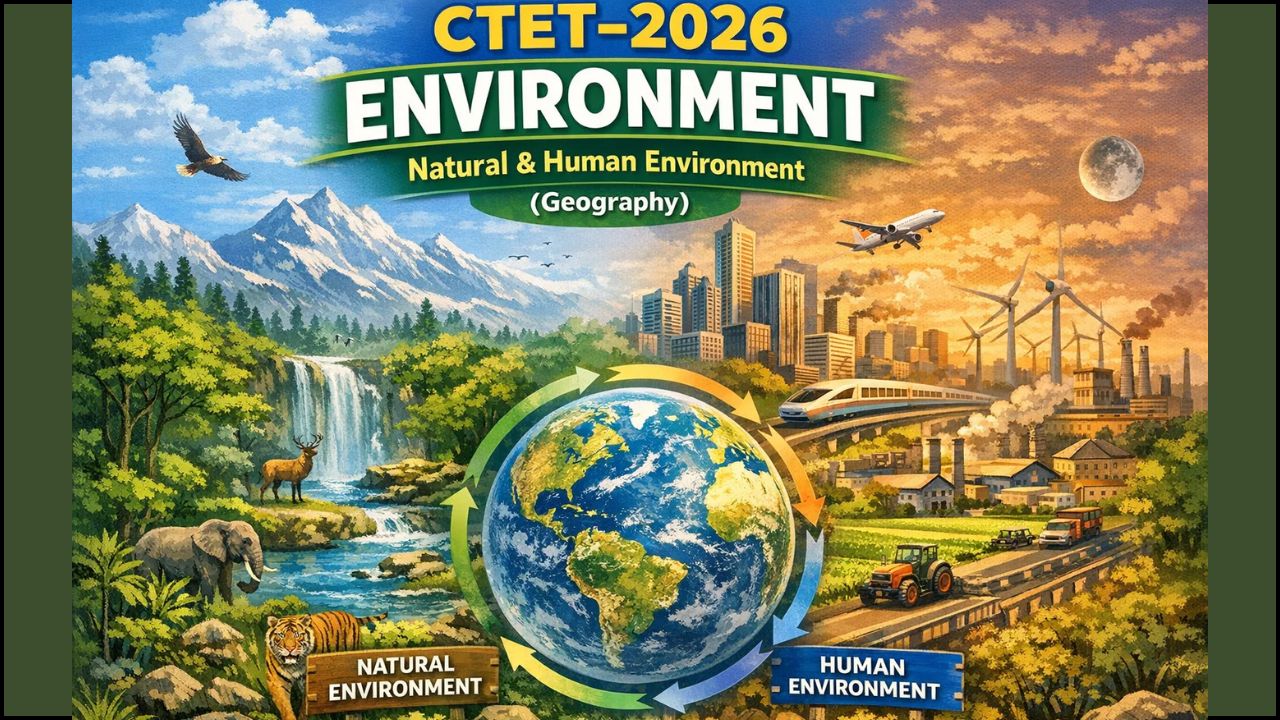
पर्यावरणात नैसर्गिक आणि मानवी (Natural And Human Environment)घटक असतात. नैसर्गिक वातावरणात वायुमंडल, भूमंडल, जलमंडल आणि जीवमंडल येतात. मानवी वातावरणात शहरी, ग्रामीण, सांस्कृतिक आणि आर्थिक घटक येतात. दोन्ही परस्पर संवाद साधतात आणि सतत व्यवस्थापन आवश्यक आहे.
परिचय
The environment refers to all the external conditions, living and non-living, surrounding an organism. It is broadly categorized into Natural And Human Environment.
पर्यावरण म्हणजे एखाद्या जीवाभोवती असलेली सर्व परिस्थिती – जिवंत आणि निर्जीव घटक. पर्यावरण मुख्यतः नैसर्गिक वातावरण आणि मानवी वातावरण असे वर्गीकृत केले जाते.
CTET Geography Articles – सर्व भूगोल विषयांसाठी
India Environment Portal– Information on Indian environment, policies, and studies.
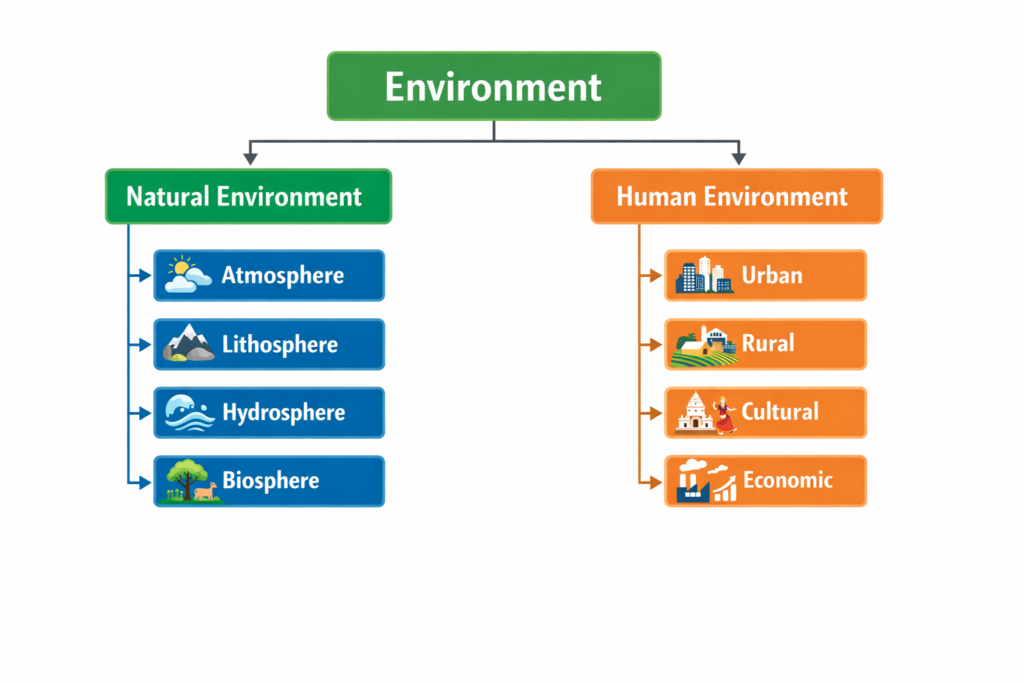
1️⃣ Natural Environment / नैसर्गिक वातावरण
Natural environment includes all the elements that occur naturally without human interference.
नैसर्गिक वातावरणामध्ये असे घटक येतात जे मानवी हस्तक्षेपाशिवाय नैसर्गिकरित्या अस्तित्वात आहेत.
Components / घटक
- Atmosphere (वायुमंडल): The layer of gases surrounding Earth, important for weather and climate.
पृथ्वीभोवती असलेला गॅसचा थर, हवामान व पावसासाठी महत्त्वाचा. - Lithosphere (भूमंडल): Landforms, rocks, soil.
जमिन, खडक, माती. - Hydrosphere (जलमंडल): Oceans, rivers, lakes, groundwater.
महासागर, नद्या, तलाव, भूजल. - Biosphere (जीवमंडल): Plants, animals, humans interacting with environment.
वनस्पती, प्राणी, मानव आणि त्यांचा परस्पर संवाद.
Importance / महत्त्व
- Provides resources for survival (water, food, minerals).
- Maintains ecological balance.
- Supports biodiversity.
नैसर्गिक वातावरणाचे महत्त्व
- जीवनासाठी आवश्यक संसाधने पुरवते (पाणी, अन्न, खनिज).
- पर्यावरणीय संतुलन राखते.
- जैवविविधता टिकवून ठेवते.
2️⃣ Human Environment / मानवी वातावरण
Human environment refers to the surroundings created or modified by humans to fulfill their needs.
मानवी वातावरण म्हणजे मानवाने तयार केलेले किंवा सुधारित केलेले परिसर, जे त्यांच्या जीवनासाठी आवश्यक असतो.
Components / घटक
- Urban Areas (शहरी भाग): Cities, towns, infrastructure.
- Rural Areas (ग्रामीण भाग): Villages, farmlands, forests managed by humans.
- Cultural Landscape (सांस्कृतिक दृश्य): Architecture, monuments, traditions.
- Economic Activities (आर्थिक क्रिया): Agriculture, industry, trade, transportation.
Importance / महत्त्व
- Facilitates human development and social interaction.
- Supports economy and employment.
- Shapes lifestyle and culture.
Relationship between Natural And Human Environment/ नैसर्गिक आणि मानवी वातावरणाचा संबंध
- Humans depend on natural resources for survival.
- Human activities can alter the natural environment (deforestation, pollution).
- Sustainable development aims to balance both environments.
मानव नैसर्गिक संसाधनांवर अवलंबून असतो.
मानवी क्रिया नैसर्गिक वातावरण बदलू शकतात (वननाश, प्रदूषण).
सतत विकासाचा उद्देश दोन्ही वातावरणांचा संतुलन राखणे आहे.
MCQs –Natural And Human Environment
- Which of the following is a part of the natural environment?
a) Roads
b) Rivers ✅
c) Cities
d) Factories - Human environment mainly includes:
a) Mountains
b) Cities ✅
c) Oceans
d) Forests - Which sphere includes all living organisms?
a) Lithosphere
b) Hydrosphere
c) Biosphere ✅
d) Atmosphere - Deforestation affects which environment?
a) Human environment
b) Natural environment ✅
c) Both
d) None - Sustainable development aims to:
a) Exploit resources
b) Balance natural & human environment ✅
c) Increase pollution
d) Remove urban areas
6.Which of the following is not a part of the human environment?
a) Industries
b) Temples
c) Rivers ✅
d) Roads
7.Which component of natural environment provides oxygen and absorbs carbon dioxide?
a) Lithosphere
b) Biosphere ✅
c) Hydrosphere
d) Atmosphere
7.Urbanization mainly affects:
a) Natural environment ✅
b) Human environment
c) Both
d) None
8.Agriculture is a part of:
a) Natural environment
b) Human environment ✅
c) Both
d) None
Which of the following is an example of cultural landscape?
a) Mountains
b) Temples ✅
c) Oceans
d) Forests
9.Hydrosphere includes:
a) Rivers, Lakes, Oceans ✅
b) Soil, Rocks
c) Plants & Animals
d) Cities & Villages
10.The study of the relationship between humans and their environment is called:
a) Ecology
b) Human Geography ✅
c) Botany
d) Astronomy
11.Mining primarily impacts:
a) Human environment
b) Natural environment ✅
c) Both
d) None
12.Which of the following is a sustainable human activity?
a) Overfishing
b) Renewable energy use ✅
c) Deforestation
d) Industrial pollution
13.Forests are part of:
a) Human environment
b) Natural environment ✅
c) Urban areas
d) Cultural landscape
निष्कर्ष
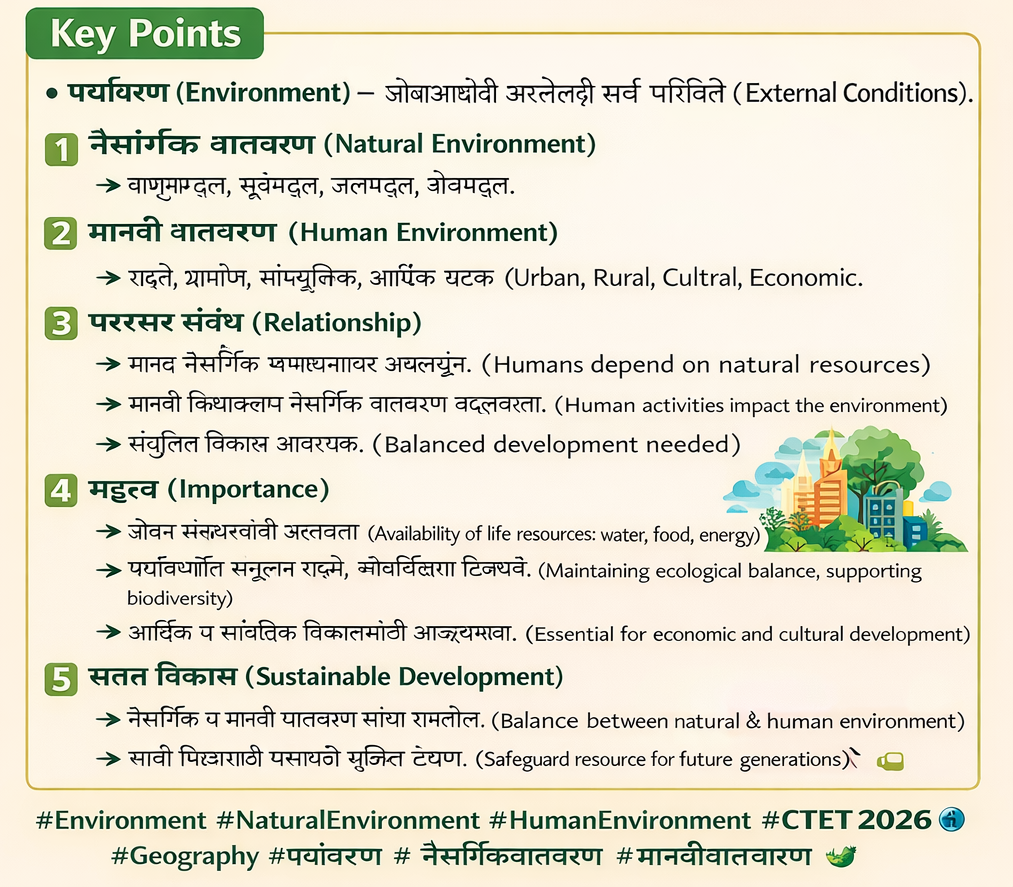
- पर्यावरणाचा अर्थ:Natural And Human Environment
पर्यावरण म्हणजे जीवाभोवती असलेली सर्व परिस्थिती, जिवंत आणि निर्जीव घटकांसहित. - मुख्य प्रकार:
- नैसर्गिक वातावरण (Natural Environment): वायुमंडल, भूमंडल, जलमंडल, जीवमंडल.
- मानवी वातावरण (Human Environment): शहरी, ग्रामीण, सांस्कृतिक, आर्थिक घटक.
- परस्पर संबंध:
- मानव नैसर्गिक संसाधनांवर अवलंबून असतो.
- मानवी क्रियाकलाप नैसर्गिक वातावरणावर प्रभाव टाकतात (उदा. प्रदूषण, वने नष्ट करणे).
- संतुलित विकास आणि पर्यावरणीय संवर्धन आवश्यक आहे.
- महत्त्व:
- जीवनसाधनांची उपलब्धता (अन्न, पाणी, ऊर्जा).
- पर्यावरणीय संतुलन राखणे.
- जैवविविधता टिकवून ठेवणे.
- मानवाच्या आर्थिक, सामाजिक, सांस्कृतिक विकासासाठी आधार.
- सतत विकासाचे उद्दिष्ट:
नैसर्गिक व मानवी वातावरण(Natural And Human Environment) यांचा समतोल राखून भविष्यातील पिढ्यांसाठी संसाधने सुरक्षित ठेवणे.