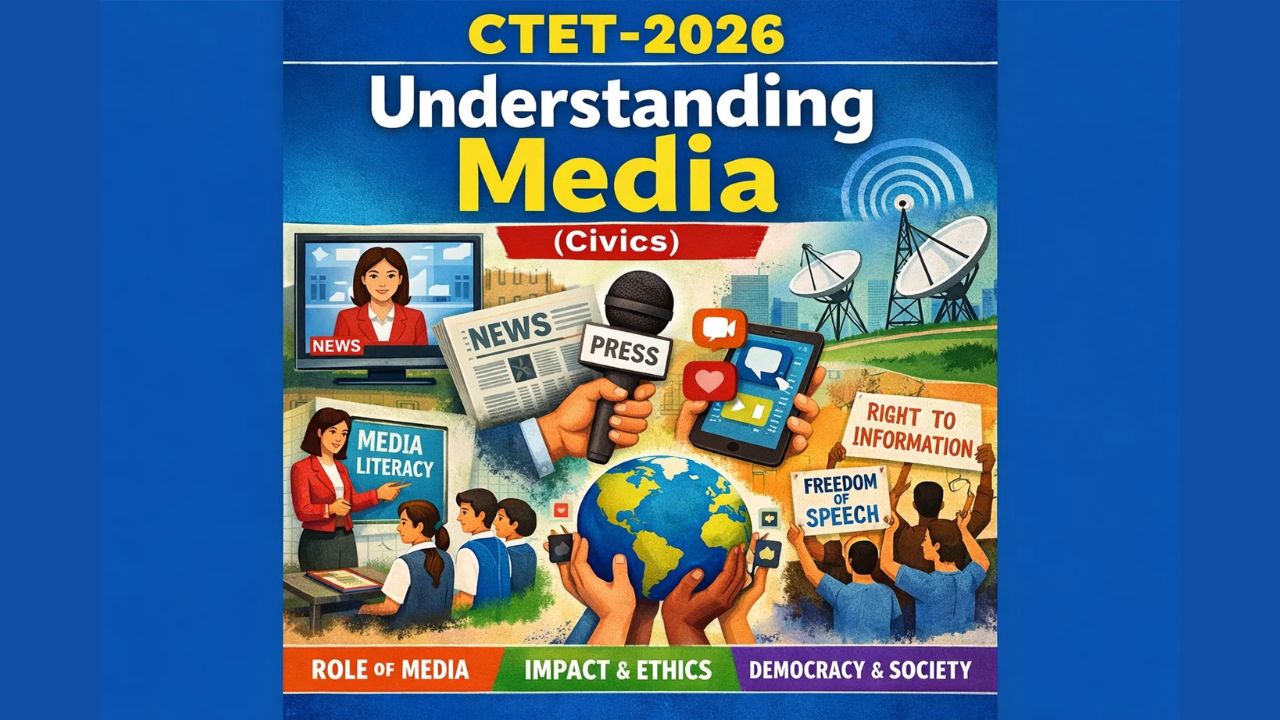
Understanding Media म्हणजे माहिती लोकांपर्यंत पोहोचवणारी व्यवस्था. लोकशाहीमध्ये media जागरूकता, transparency आणि accountability निर्माण करते. Media bias, advertising आणि fake news यांची जाणीव असणं आवश्यक आहे.
1) मिडिया म्हणजे काय?
मिडिया म्हणजे माहिती, बातम्या, विचार, मतं (opinions) आणि मनोरंजन (entertainment) लोकांपर्यंत पोहोचवणारी साधने.
NCERT Class 7 Civics – Chapter 7: Understanding Media
Media चे प्रमुख प्रकार :
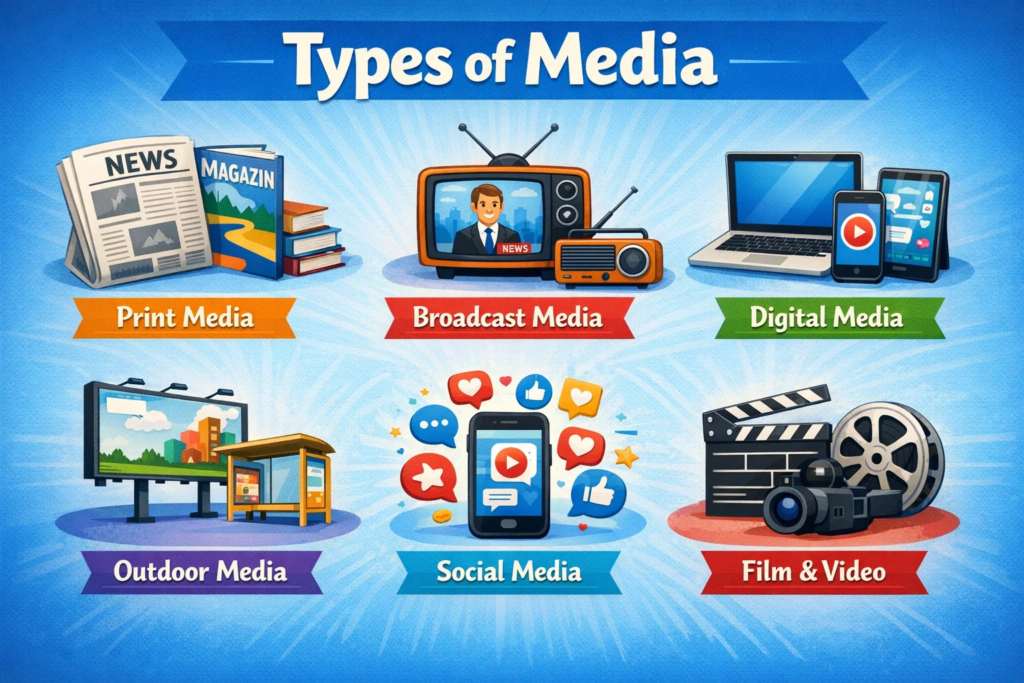
- Print – Newspapers, Magazines, Journals
- Electronic – Television, Radio
- Digital / New – Internet, Social Media, News Apps, YouTube
- Social – Facebook, X (Twitter), Instagram, WhatsApp
👉 Media is called the “Fourth Pillar of Democracy” कारण ते Government वर watch ठेवते.
2) Democracy मध्ये मिडियाची भूमिका
Role of Media in a Democracy
लोकशाहीमध्ये (Democracy)मिडिया हे:
- Government activities ची माहिती लोकांपर्यंत पोहोचवते
- Citizens ना aware करते
- Public opinion तयार करण्यात मदत करते
- Government ला accountable ठेवते
उदा. (Example):
Scam, corruption, injustice याबाबत media report करते → Government action घेते.
3) Media and Public Opinion
Public Opinion म्हणजे लोकांचे सामूहिक मत.
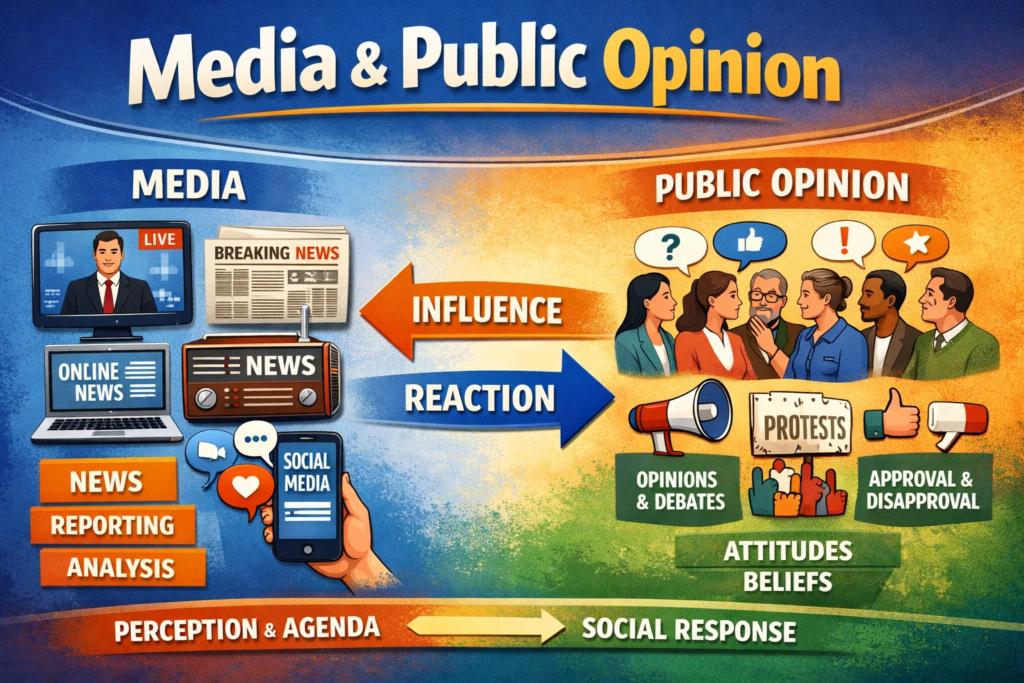
मिडिया कसं opinion तयार करते?
- News selection
- Headlines
- Images & visuals
- Debates & discussions
👉 कधी कधी biased reporting मुळे चुकीचं मत तयार होऊ शकतं.
4)मिडिया Bias म्हणजे काय?
Media Bias म्हणजे बातम्या देताना एकतर्फी (one-sided) भूमिका घेणे.
Bias चे प्रकार:
- Political bias
- Corporate bias
- Religious / Social bias
CTET Point:
All media is not neutral; therefore, critical thinking is important.
5) TRP आणि Commercial Media
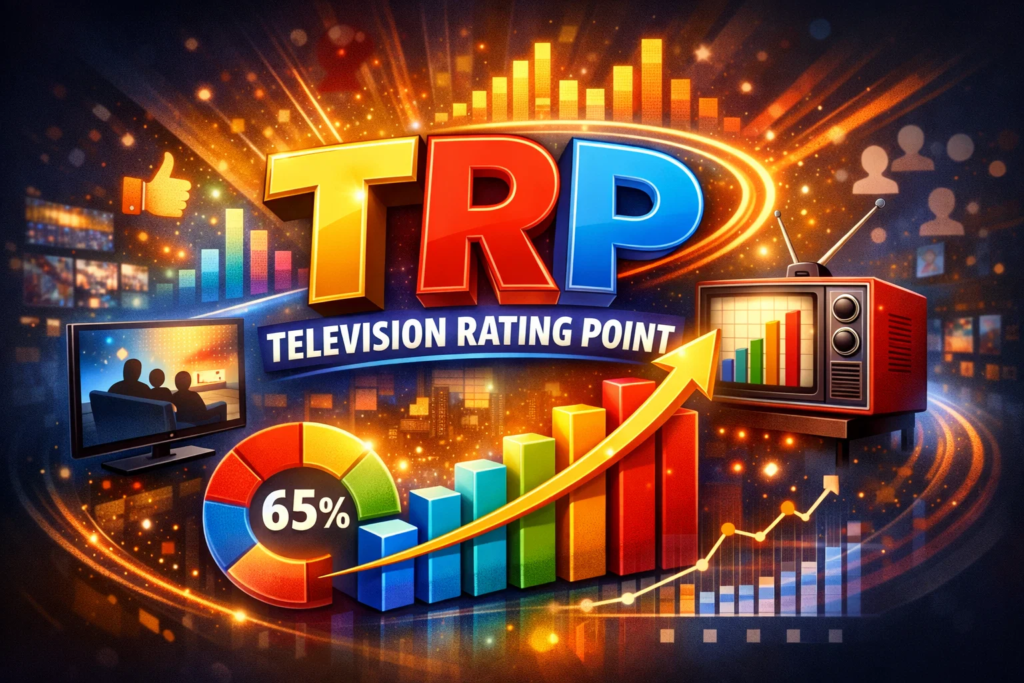
TRP (Television Rating Point)
= किती लोक कोणता कार्यक्रम पाहतात याचं मोजमाप
TRP जास्त मिळवण्यासाठी:
- Sensational news
- Breaking news culture
- Emotional content
👉 यामुळे serious issues कधी कधी दुर्लक्षित होतात.
6) Media Ownership and Control
आज बऱ्याच मिडिया houses:
- मोठ्या कंपन्यांच्या (corporates) मालकीचे आहेत
- Political influence असू शकतो
Result:
- Certain news ला जास्त coverage
- Some voices are ignored
7) Media and Advertising
Advertising हे मिडियाचं मुख्य income source आहे.
Effects of Advertising:
- Consumer culture वाढते
- Brand influence
- Children & youth वर परिणाम
👉 Media sometimes promotes products more than public interest.
8) Freedom of Media
Article 19(1)(a) – Indian Constitution
= Freedom of Speech & Expression
Media ला:
- Free reporting चा अधिकार
- But reasonable restrictions आहेत (law, security, morality)
Free Media = Strong Democracy
9) Media Literacy (CTET Important)
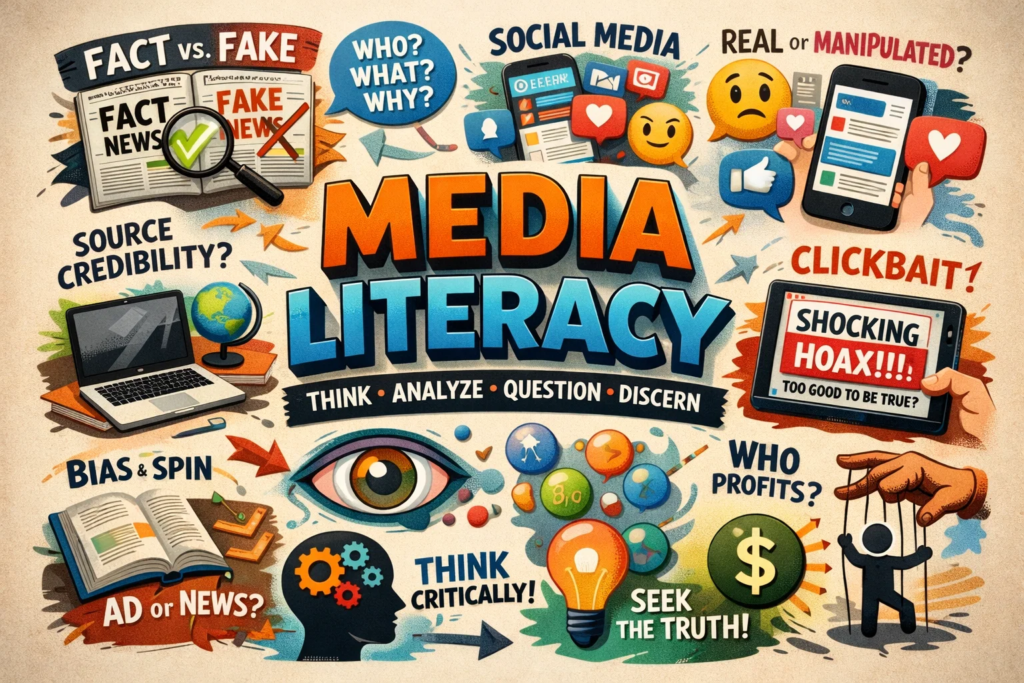
मिडिया Literacy म्हणजे:
- Media content समजून घेण्याची क्षमता
- True vs Fake news ओळखणे
- Critical analysis करणे
Teacher म्हणून:
- Students मध्ये मिडिया literacy develop करणं गरजेचं आहे.
10) Social Media – Advantages & Disadvantages
Advantages:
- Fast communication
- Citizen journalism
- Awareness campaigns
Disadvantages:
- Fake news
- Rumours
- Cyber bullying
👉 CTET मध्ये Fake News related questions विचारले जातात.
11) Media and Government
Media:
- Government policies explain करते
- Parliament debates report करते
- Elections coverage देते
Government:
- Press Information Bureau (PIB)
- Official media releases
👉 Balance आवश्यक आहे – neither control nor misuse.
12) Media as a Watchdog
Watchdog role:
- Power misuse expose करणे
- Human rights violations highlight करणे
Example:
RTI, investigative journalism
13) मिडिया – सकारात्मक व नकारात्मक परिणाम
Positive:
- Awareness
- Transparency
- Democracy strengthening
Negative:
- Sensationalism
- Paid news
- Privacy invasion
50 MCQs (With Answers)
1. Media is often called the ______ of democracy.
A) First pillar
B) Second pillar
C) Third pillar
D) Fourth pillar ✅
2. Which of the following is a type of Print Media?
A) Television
B) Radio
C) Newspaper ✅
D) Internet
3. Media helps democracy by:
A) Controlling citizens
B) Creating fear
C) Providing information ✅
D) Avoiding issues
4. Public Opinion means:
A) Government decision
B) Court judgment
C) Opinion of people ✅
D) Media rules
5. Which media reaches people fastest today?
A) Print media
B) Radio
C) Social media ✅
D) Magazines
6. TRP is related to:
A) Newspaper sales
B) Radio frequency
C) Television programmes ✅
D) Internet speed
7. Media Bias means:
A) Neutral news
B) One-sided reporting ✅
C) Educational reporting
D) Government notice
8. Which Article of Indian Constitution ensures freedom of media?
A) Article 14
B) Article 19(1)(a) ✅
C) Article 21
D) Article 32
9. Sensational news is mainly used to increase:
A) Literacy
B) TRP ✅
C) Accuracy
D) Democracy
10. Which is NOT an electronic media?
A) TV
B) Radio
C) Newspaper ✅
D) Podcast
11. Media acts as a ______ in democracy.
A) Ruler
B) Watchdog ✅
C) Judge
D) Police
12. Which one is an example of Digital Media?
A) Wall poster
B) News app ✅
C) Pamphlet
D) Magazine
13. Paid news refers to:
A) Free advertisements
B) News paid by companies/politicians ✅
C) Government notice
D) Educational article
14. Fake news spreads fastest through:
A) Books
B) Journals
C) Social Media ✅
D) Libraries
15. Media literacy means:
A) Reading newspapers
B) Understanding and analysing media content ✅
C) Writing articles
D) Watching TV
16. Which of the following shapes public opinion the most?
A) Weather
B) Media reporting ✅
C) Geography
D) Transport
17. Which body controls print media ethics in India?
A) Supreme Court
B) Election Commission
C) Press Council of India ✅
D) RBI
18. Media ownership today is mostly with:
A) Teachers
B) Farmers
C) Corporate groups ✅
D) Students
19. Advertising is important for media because it:
A) Spreads literacy
B) Gives income to media ✅
C) Stops news
D) Controls government
20. Which media mainly uses visuals?
A) Radio
B) Newspaper
C) Television ✅
D) Journal
21. Media reporting should be:
A) Biased
B) Sensational
C) Neutral and responsible ✅
D) Paid
22. Which of the following is a negative impact of media?
A) Awareness
B) Transparency
C) Sensationalism ✅
D) Education
23. Citizen journalism is mostly possible due to:
A) Print media
B) Social media ✅
C) Radio
D) Magazines
24. Media helps government by:
A) Hiding policies
B) Explaining policies to people ✅
C) Creating rumours
D) Spreading fear
25. Which media reaches rural areas easily?
A) Radio ✅
B) Magazine
C) Internet only
D) Newspaper
26. Media which uses internet is called:
A) Print media
B) Electronic media
C) New/Digital media ✅
D) Traditional media
27. Media freedom is necessary for:
A) Dictatorship
B) Democracy ✅
C) Monarchy
D) Colonial rule
28. Which of the following is NOT a function of media?
A) Informing people
B) Entertaining people
C) Creating laws ✅
D) Educating people
29. Headline plays an important role because it:
A) Decorates paper
B) Shapes opinion ✅
C) Fills space
D) Wastes time
30. Media should avoid:
A) Truth
B) Facts
C) Ethics
D) Fake news ✅
31. Which media is cheapest and fastest?
A) Newspaper
B) Radio
C) Social media ✅
D) Magazine
32. Media and democracy relationship is:
A) Unimportant
B) Harmful
C) Interdependent ✅
D) Separate
33. Which of the following is an example of broadcast media?
A) Newspaper
B) Radio ✅
C) Book
D) Journal
34. Media highlights which issues?
A) Only political
B) Only sports
C) Public issues ✅
D) Personal issues only
35. Which is a disadvantage of social media?
A) Awareness
B) Fast communication
C) Fake news ✅
D) Education
36. Media influences elections by:
A) Voting
B) Counting votes
C) Providing information to voters ✅
D) Making laws
37. Media responsibility means:
A) Increasing TRP
B) Publishing truth ethically ✅
C) Supporting one party
D) Ignoring people
38. Which media is best for detailed analysis?
A) TV
B) Radio
C) Newspaper ✅
D) Social media
39. Which group is most affected by advertisements?
A) Old people
B) Children and youth ✅
C) Teachers
D) Farmers
40. Media should respect:
A) TRP only
B) Corporate interest
C) Privacy of people ✅
D) Sensation
41. Media helps transparency by:
A) Hiding information
B) Showing government actions ✅
C) Creating fear
D) Avoiding debate
42. Media debates are useful because they:
A) Create noise
B) Waste time
C) Present different views ✅
D) Confuse people
43. Which media works without electricity?
A) TV
B) Internet
C) Radio (battery) ✅
D) Computer
44. Media ethics means:
A) Paid news
B) Sensationalism
C) Responsible journalism ✅
D) Rumours
45. Which media is most interactive?
A) Print media
B) Radio
C) Social media ✅
D) Magazine
46. Media literacy is important for teachers because:
A) They run media
B) They guide students to think critically ✅
C) They publish news
D) They increase TRP
47. Which of the following strengthens democracy?
A) Controlled media
B) Free and responsible media ✅
C) Paid news
D) Biased reporting
48. Media should act in public interest, not in:
A) Social interest
B) National interest
C) Corporate interest only ✅
D) Educational interest
49. Media helps citizens by:
A) Confusing them
B) Entertaining only
C) Informing and empowering them ✅
D) Controlling them
50. Understanding Media chapter mainly teaches:
A) Technology
B) Critical thinking about media ✅
C) Advertisement making
D) Journalism course
निष्कर्ष
मिडिया ही लोकशाहीची अत्यंत महत्त्वाची संस्था आहे.
ती माहिती देते, जागरूकता निर्माण करते आणि सरकारवर नियंत्रण ठेवते.
परंतु media literacy आणि critical thinking नसल्यास media चा गैरवापर होऊ शकतो.