
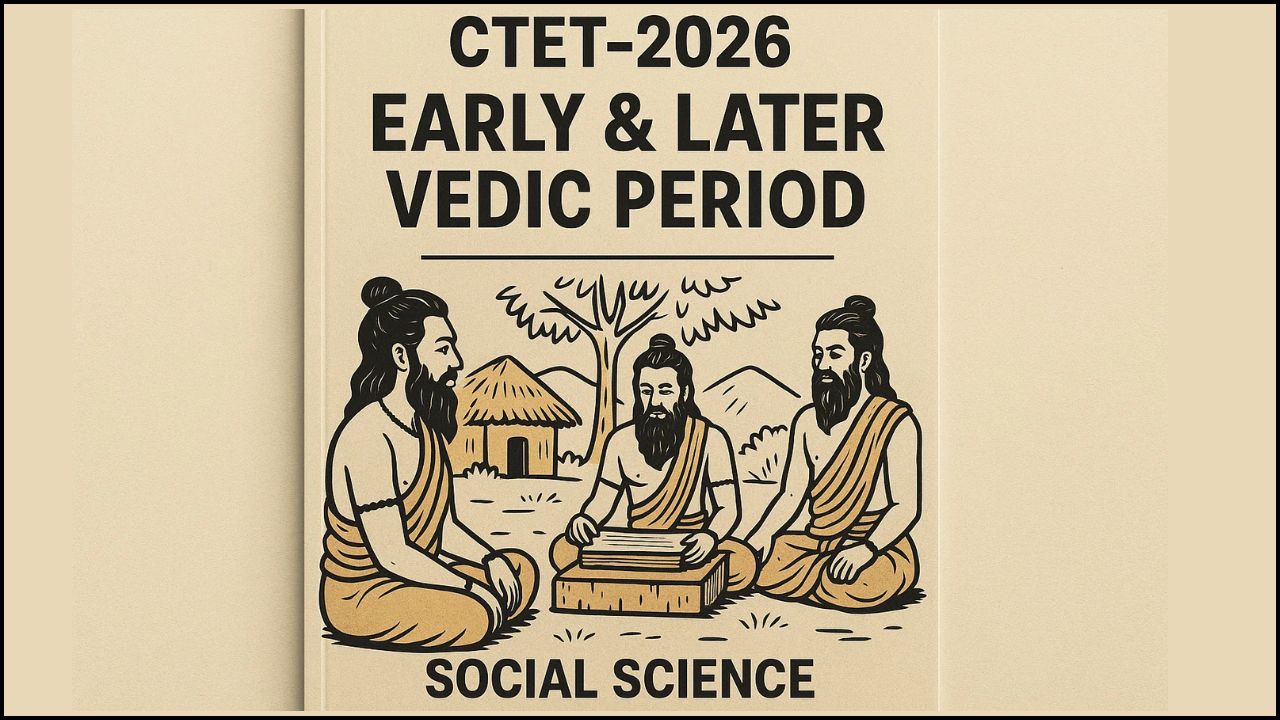
हा लेख भारतातील वैदिक संस्कृतीचा विकास, म्हणजेच Early Vedic Period (1500–1000 BCE) आणि Later Vedic Period (1000–600 BCE) यांचा सविस्तर आढावा देतो. समाजव्यवस्था, धर्म, अर्थव्यवस्था, साहित्य, राजकीय व्यवस्थेतील बदल आणि सामाजिक संक्रमण यांचा तुलनात्मक अभ्यास CTET 2026 Social Science—History साठी अत्यंत महत्त्वाचा आहे.
प्रस्तावना
भारतीय इतिहासात वैदिक संस्कृतीला अत्यंत महत्त्वाचे स्थान आहे. या काळात भारतीय समाजाचे धर्म, सामाजिक व्यवस्था, कुटुंब, अर्थव्यवस्था, व्यवहार, शासन प्रणाली यांची पायाभरणी झाली. वैदिक संस्कृतीचा अभ्यास दोन टप्प्यांत केला जातो — प्रारंभीक वैदिक काळ (Early Vedic Age) आणि उत्तर वैदिक काळ (Later Vedic Age). आर्यांचे भारतीय उपखंडात आगमन हे या काळाच्या इतिहासाचे पहिले महत्त्वाचे पाऊल मानले जाते.
The Early Vedic Age reflects a simple, pastoral, cattle-based society. Rigveda — the oldest known text — gives valuable information about tribes, chiefs, religious beliefs, and daily life. Society was more egalitarian and less rigid. However, in the Later Vedic Phase, society became more complex. Agriculture, iron technology, growing kingdoms, varna hierarchy, yagnas and expansion towards the Ganga plains brought new changes in politics, culture, and economy.
या दोन्ही काळाचा अभ्यास CTET परीक्षेसाठी अत्यंत महत्त्वाचा आहे कारण यावरून विद्यार्थ्यांना भारताच्या सामाजिक विकासाचा प्रवास, धर्म, साहित्य आणि अर्थव्यवस्थेतील बदल स्पष्टपणे समजतो.
1. आर्यांचे आगमन (Arrival of Aryans)
- Aryans came from Central Asia (Steppe region theory widely supported).
- त्यांनी उत्तर-पश्चिम भारतात (Punjab, Sapta-Sindhu region) वस्ती केली.
- ते nomadic, pastoral people होते आणि गुरेढोरे हे त्यांचे मुख्य संपत्ती साधन होते.
- आर्यांची मुख्य भाषा → Indo-Aryan (Sanskrit).
2. प्रारंभीक वैदिक काळ ( Early Vedic Period – 1500–1000 BCE)
✔ समाज (Society)
- कुटुंब हे समाजाचे मूलभूत घटक.
- Patriarchal पण महिलांना स्वातंत्र्य, समान स्थान, शिक्षणाचा अधिकार.
- बालविवाह नव्हता.
- ग्राम, विश, जन अशा सामाजिक संघटना.
✔ अर्थव्यवस्था (Economy)
- Pastoral economy → cattle-based.
- कृषीची सुरुवात → Barley, Wheat.
- Barter system.
- Trade limited & simple.
✔ राजकीय व्यवस्था (Political System)
- Tribal chief → Rajan.
- Assembly bodies: Sabha, Samiti → लोकशाही स्वरूपाची.
- राजा पूर्ण सत्ता नसलेला.
✔ धर्म (Religion)
- Nature worship → अग्नी, इंद्र, वरुण, सोम.
- Yajnas → लहान स्वरूपाचे.
- Idol worship नव्हते.
✔ साहित्य (Literature)
- Rigveda हे मुख्य ग्रंथ (1028 Hymns).
- संस्कृत भाषेचा विकास.
3. उत्तर वैदिक काळ (Later Vedic Period – 1000–600 BCE)
✔ समाज (Society)
- Varna system rigid → ब्राह्मण, क्षत्रिय, वैश्य, शूद्र.
- पितृसत्ताक व्यवस्था अधिक कडक.
- जातीव्यवस्थेची बीजांकुर.
- Women status declined → शिक्षण व सामाजिक स्वातंत्र्यात घट.
✔ अर्थव्यवस्था (Economy)
- कृषीकेंद्रित अर्थव्यवस्था.
- Iron technology → Black Soil Agriculture, forest clearance.
- अनेक नद्यांच्या दऱ्यांमध्ये मोठी वस्ती.
- व्यापार वृद्धिंगत. नाणी (Nishka, Satamana) वापरात.
✔ राजकीय व्यवस्था (Political System)
- Monarchy strengthened.
- राजा → divine authority.
- Importance of priests increased → यज्ञांची संख्या वाढली.
- Big kingdoms emerged: Kuru, Panchala, Videha.
✔ धर्म (Religion)
- यज्ञांचे महत्त्व वाढले (Ashwamedha, Rajasuya).
- पुराणकथा, दैवतांची संख्या वाढली.
- Upanishads → Philosophical shift → कर्म, आत्मा, ब्रह्म.
✔ साहित्य (Literature)
- Sama, Yajur, Atharva Vedas.
- Brahmanas, Aranyakas, Upanishads.
4. Early & Later Vedic Period – Comparative Chart
| विषय | प्रारंभीक वैदिक काळ | उत्तर वैदिक काळ |
|---|---|---|
| समाज | समानता, महिलांचे स्वातंत्र्य | Varna system कडक, महिलांचे स्थान कमी |
| अर्थव्यवस्था | Cattle-based | Agriculture + Iron tools |
| धर्म | Nature worship | यज्ञप्रधान, अनेक देव |
| साहित्य | Rigveda | बाकी ३ वेद + उपनिषदे |
| राजकारण | Sabha, Samiti प्रभावी | राजा शक्तिशाली, priest power वाढली |
अशाच प्रकारच्या CTET Study च्या अधिक माहितीसाठी येथे click करा .
NCERT आधारित अभ्यास– Early Vedic Period
NCERT Class 6 History – Chapter: Vedas and Upanishads
NCERT Class 7 History – Social & Political Life in Vedic Age
NIOS – Ancient Indian History PDFs
CTET 2026 – Important MCQs
1. Rigveda mainly describes which society?
a) Urban
b) Pastoral ✔
c) Industrial
d) Feudal
2. Which two assemblies existed in Early Vedic Age?
a) Sabha & Samiti ✔
b) Mahajanapada & Sabha
c) Samiti & Gana
d) Vidatha & Parishad
3. Which metal marked the Later Vedic age?
a) Gold
b) Bronze
c) Iron ✔
d) Silver
4. Which river region was central during Early Vedic period?
a) Ganga valley
b) Punjab & Sapta-Sindhu ✔
c) Deccan Plateau
d) Gujarat
5. Upanishads belong to which period?
a) Early Vedic
b) Later Vedic ✔
c) Gupta Period
d) Mauryan Period
निष्कर्ष
Vedic Period हा भारतातील सामाजिक, धार्मिक आणि राजकीय संरचनेचा पाया ठेवणारा काळ आहे.
Early Vedic society was simple, pastoral and more democratic.
Later Vedic society became increasingly complex with powerful kingdoms, agricultural growth, varna hierarchy, rituals and philosophical expansion.
CTET 2026 साठी या काळातील बदल, साहित्य, अर्थव्यवस्था आणि शासनव्यवस्था यांचा तुलनात्मक अभ्यास अत्यंत महत्त्वाचा आहे.